
Warfare and the Sikh Empire
At its height, the Sikh Empire was renowned for its military prowess. The Sikh military tradition dates back to Guru Hargobind (1595-1604) and fuses martial skill with spiritual principles. The sixth Guru bore two swords, miri and piri, representing temporal and spiritual authority. Beyond the battlefield, Sikh weapons carried deep cultural and spiritual significance as symbols of Sikh identity and values. Often ornately decorated, weaponry and attire reflected the honour, status and commitment of the Sikh warrior.
The following objects from Manchester Art Gallery highlight the sophistication and artistry of Sikh warfare, a grand display of imperial wealth and power.
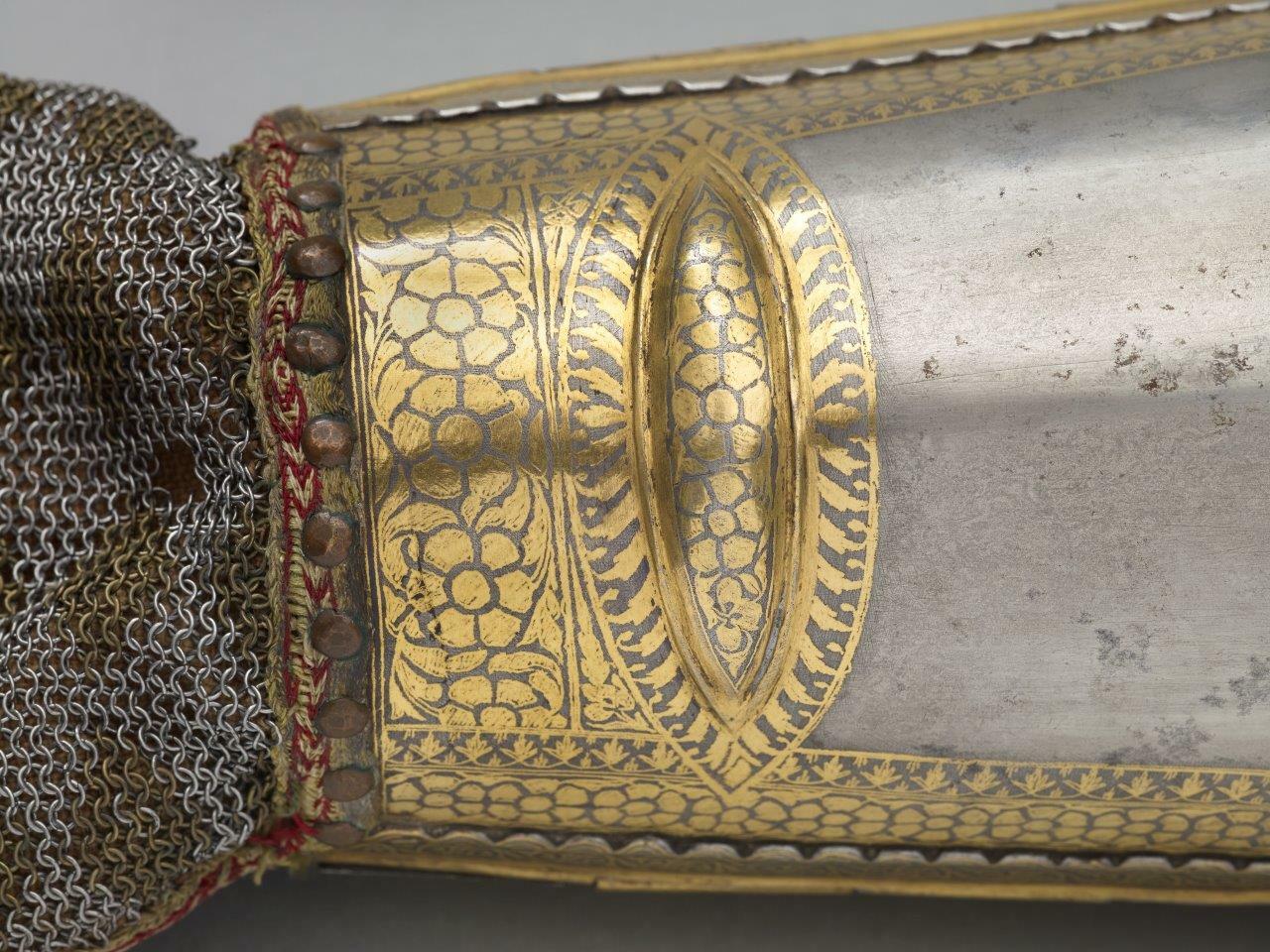
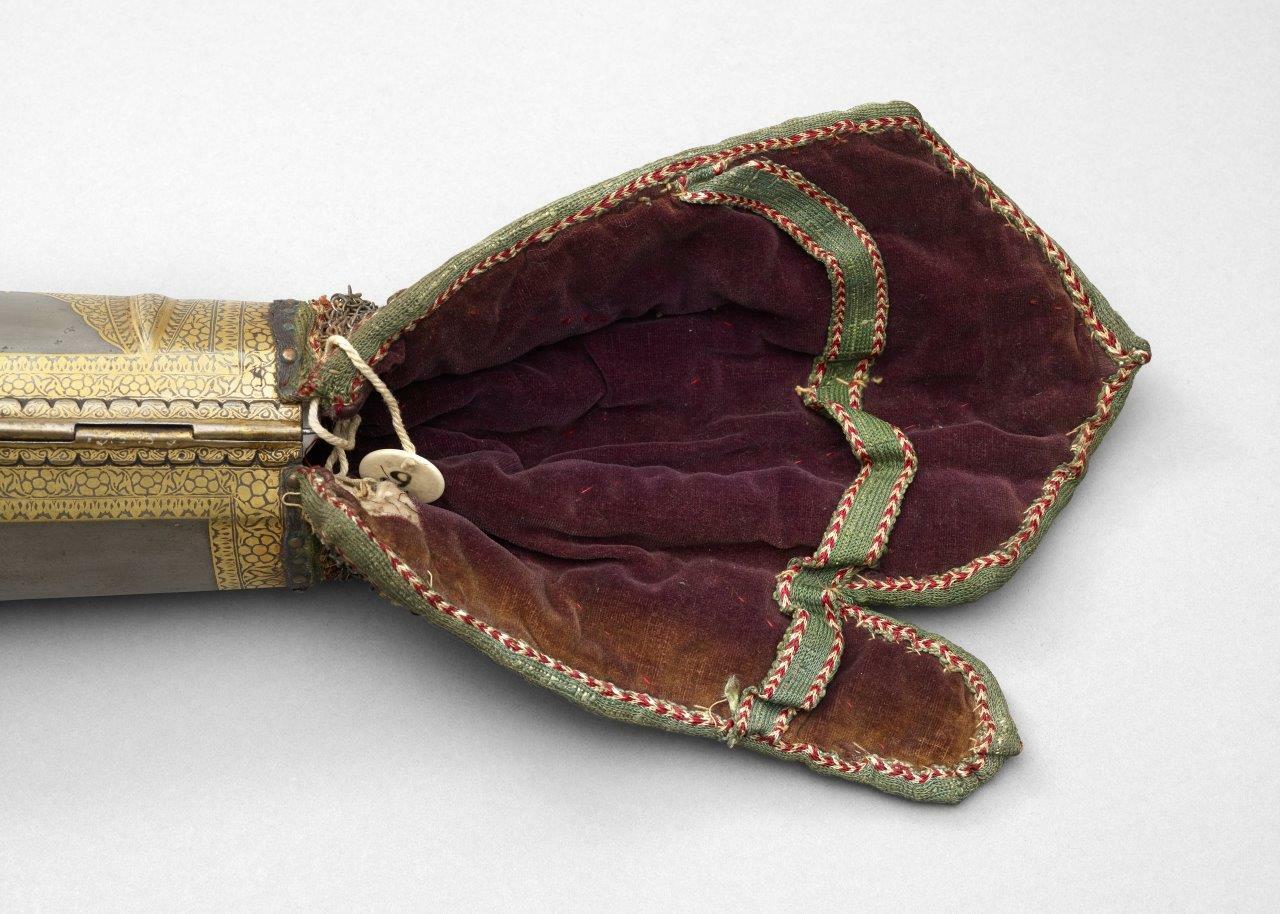
An early 19th century pair of steel gauntlets, with gold decoration and textile lining, thought to have belonged to Khurruck Singh, disciple of Bhai Maharaj Singh (d. 1856), obtained by Earl Egerton in 1855.
Sikh hostility to British rule did not end with the Anglo-Sikh Wars. A revered figure in Sikh history, Bhai Maharaj Singh played a pivotal role in the resistance movement in the Punjab after its annexation.
1910.15.9
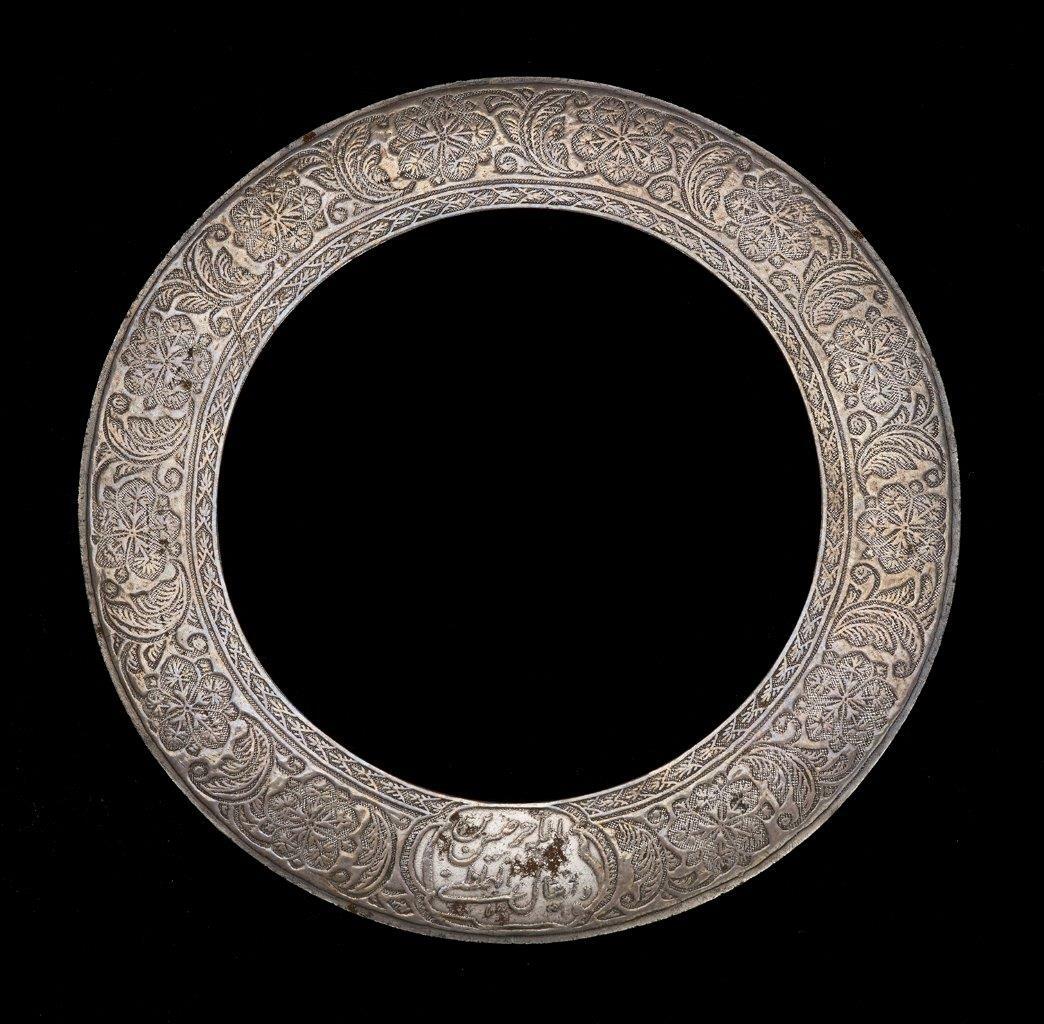
A steel chakram engraved with Colonel George Hamilton’s insignia. Chakrams are associated with Sikh warfare and form part of ceremonial dress, adorning arms, necks and turbans. This is a display piece, unfit for battle due to its uneven weight and heightened detail. It was likely gifted to Lord George Hamilton, reflecting the British fascination with Sikh warrior culture.
1910.15.17
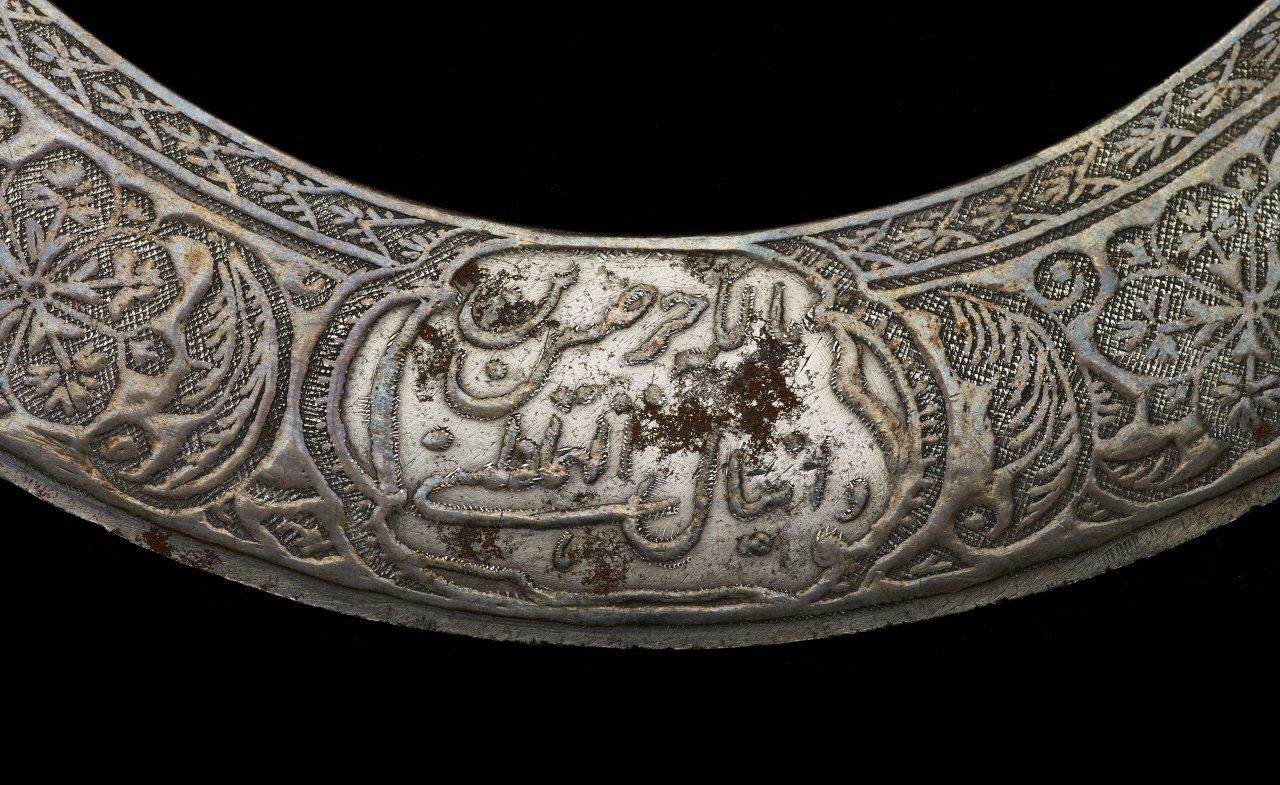
Colonel George Hamilton’s insignia.
An illustration titled 'Sikh armour' from The court and camp of Runjeet Sing, sketched by Osbourne during his stay at the court of Maharajah Ranjit Singh (1780-1839), founder of the Sikh Empire.
R38795
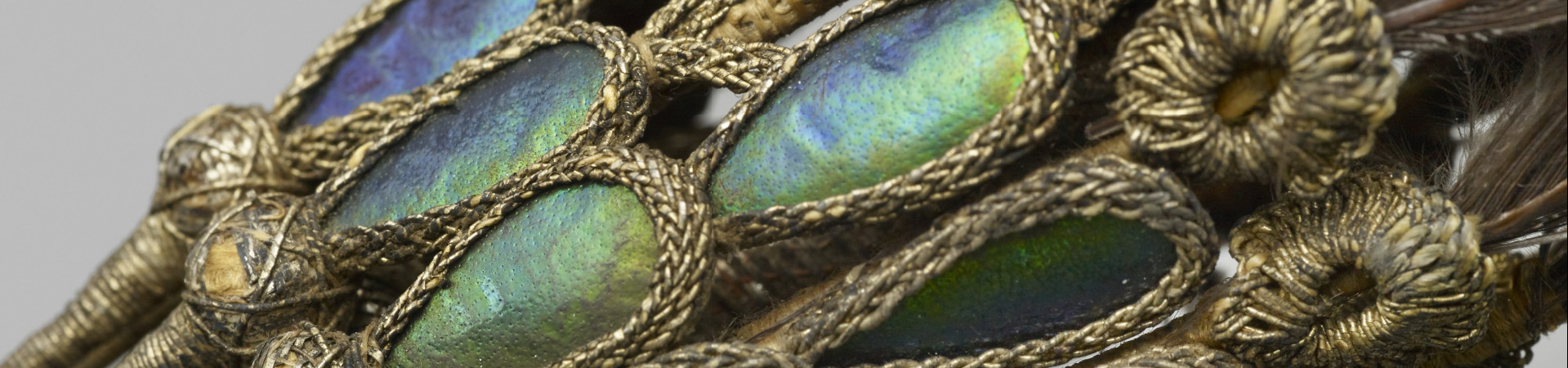
A Sikh steel helmet crafted in the Punjab, typical in style and decoration for the 19th century. The inclusion of heron feathers can be traced back to Guru Hargobind (1595-1644) and symbolises temporal authority. Heron feathers were hard to come by, and often worn by high-ranking members of the Sikh Empire under Maharajah Ranjit Singh. This item captures the artistry and refinement of Sikh military craftsmanship.