
An art lover
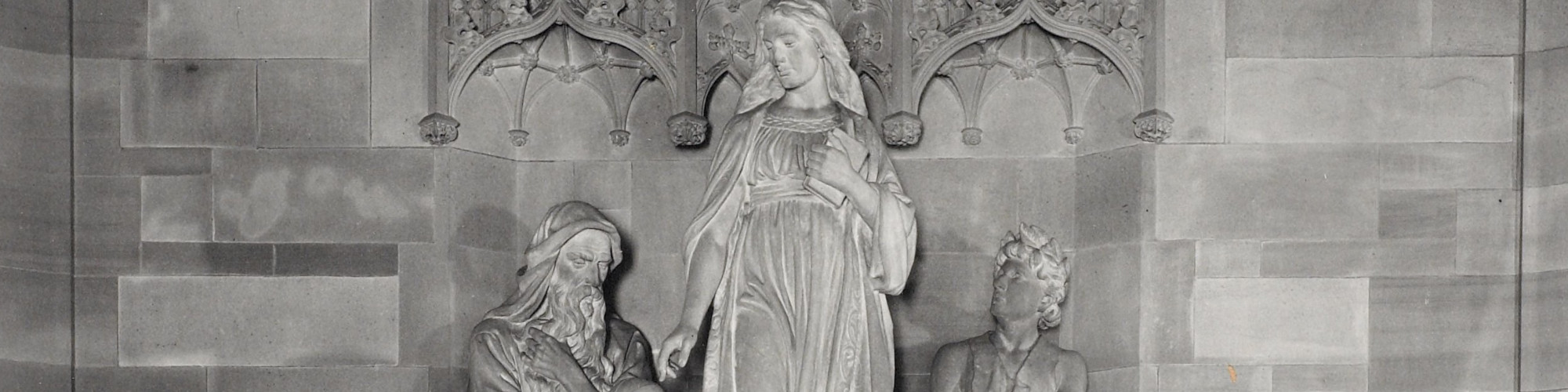
Reproduction of a photograph of the statue in the entrance hall (JRL - Uncatalogued)
Enriqueta Rylands enjoyed collecting beautiful objects and works of art. She bought paintings from the most famous artists of the day.
Enriqueta liked to visit artists at their studios in London. She bought finished paintings and commissioned new works. When she died in 1908, Enriqueta left four notable paintings to the Manchester Art Gallery, including O'er the Braes of Balquhidder by Thomas Sidney Cooper (1803–1902).
Enriqueta had a collection of carved ivories which were kept in the “Japanese Room” at Longford Hall, her Manchester home. These ivories and many of her paintings and drawings were left to friends and members of her family. The rest were sold by public auction.
The John Rylands Library was Enriqueta’s greatest commission. She oversaw the design and creation of the building. Her desire to exert control over the project led her to reject the architect’s proposal that the statues should be made by the famous artist George Frampton. Instead, she chose John Cassidy and Robert Bridgeman. Frampton was chosen to design the plasterwork which you can see on the ceiling.
A lady of considerable culture
JRL/7/7/2 Cuttings Book, 1889-1908 p. 110, Manchester Evening News 4 February 1908.
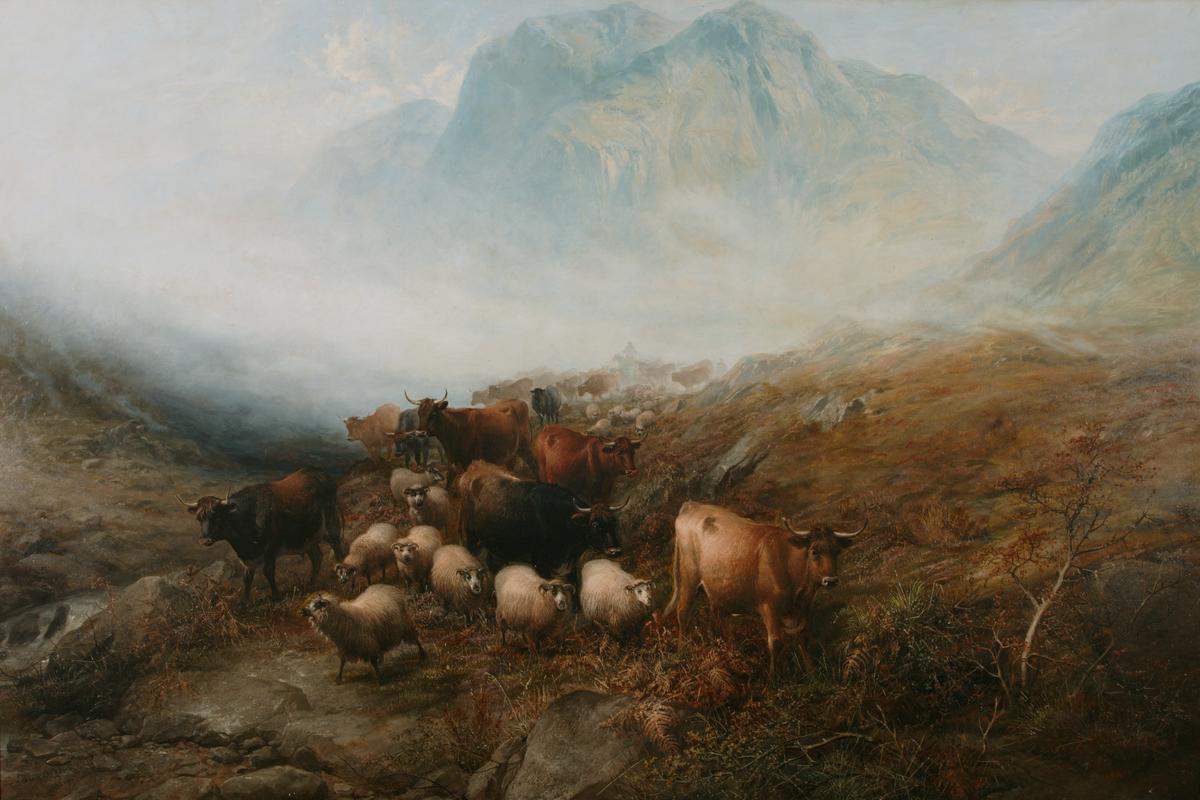
Thomas Sidney Cooper, (1803-1902), RA
© Image courtesy of Manchester Art Gallery
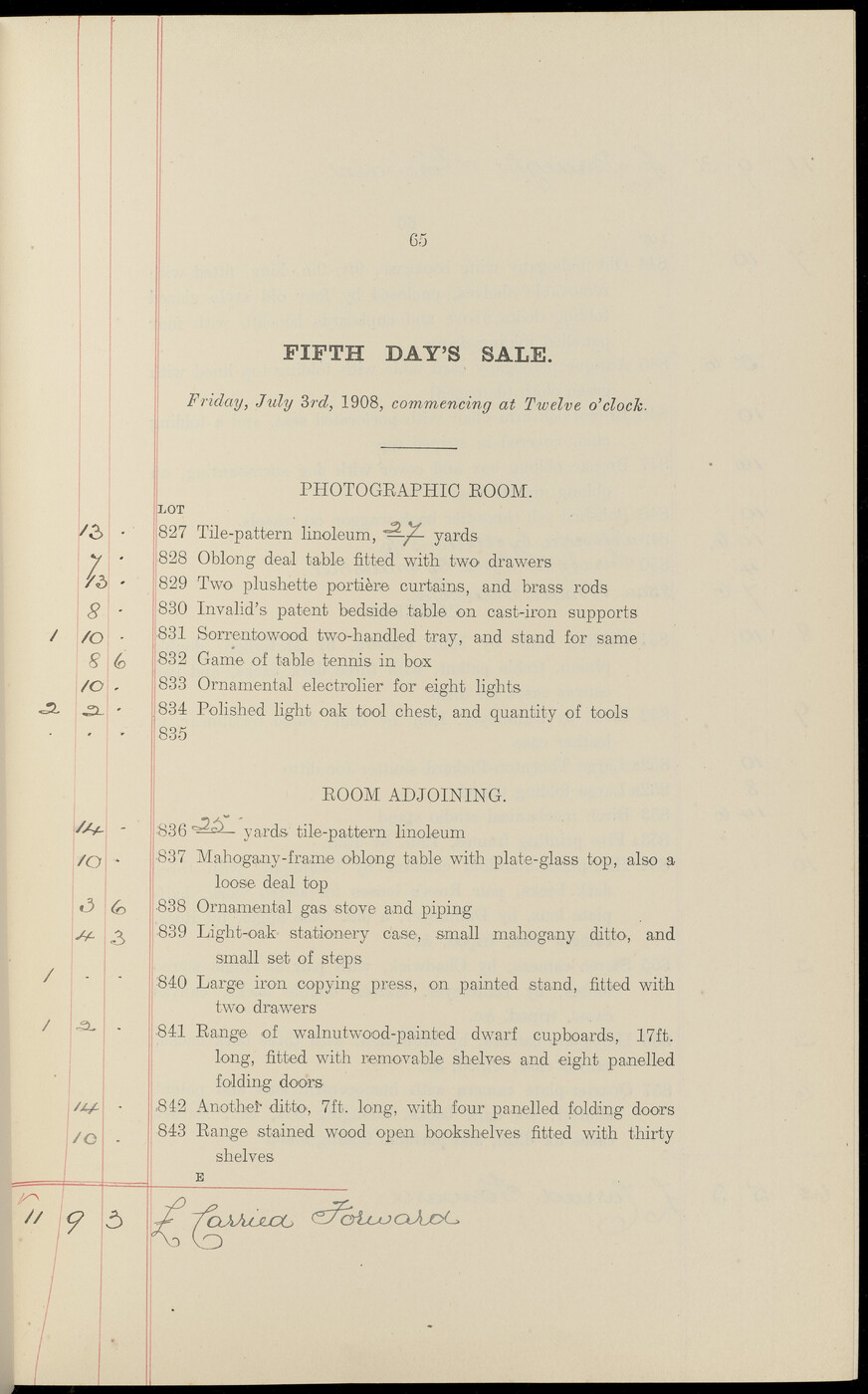
After Enriqueta died, the contents of Longford Hall were sold by auction. The sale included household furniture, paintings and ornaments, and photography equipment.
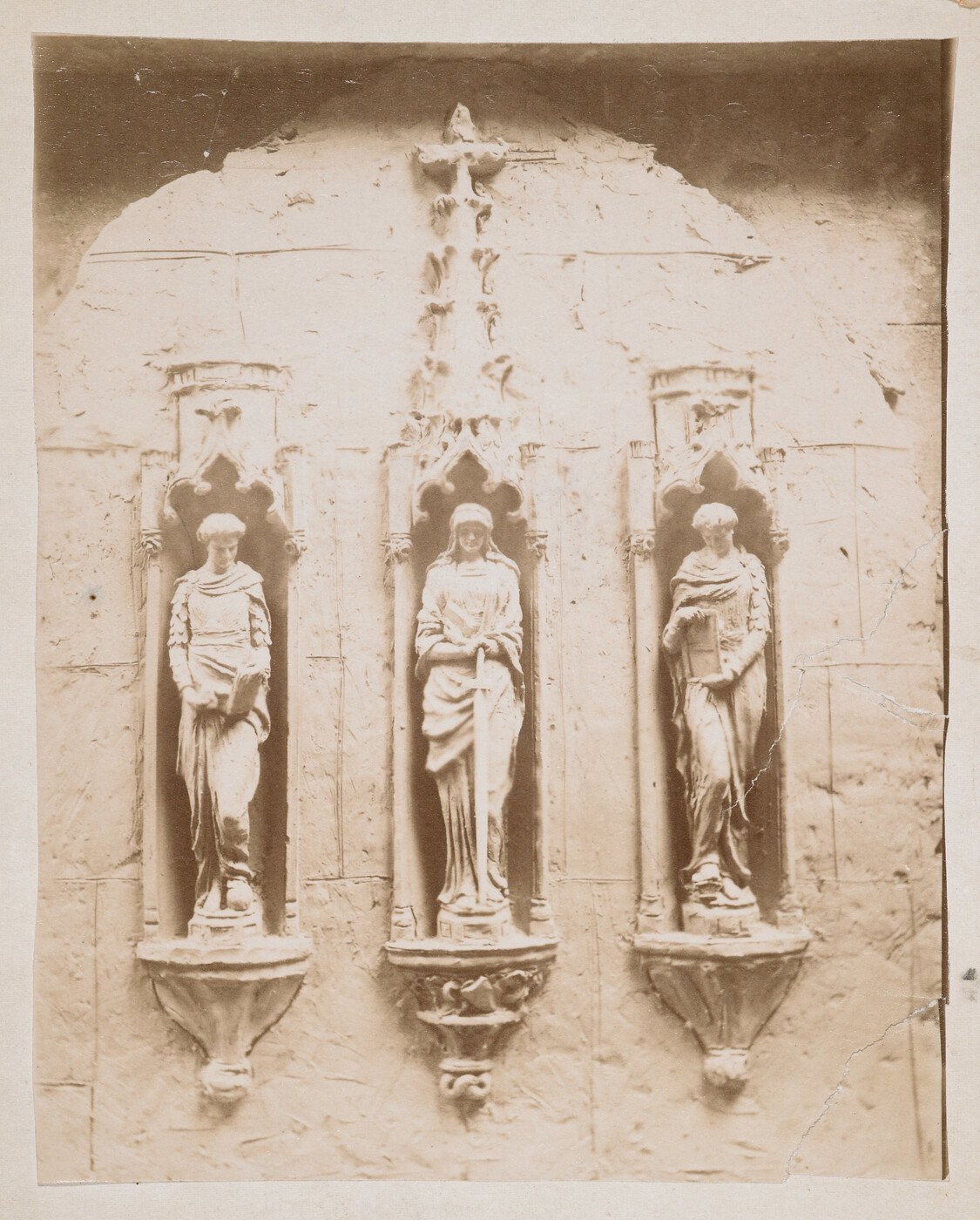
Enriqueta rejected this early design for the vestibule statue saying,
“the present appearance of three statues in a line all one height and size looks to me anything but striking and too much like the statues one sees in a cathedral.”
Enriqueta used this photograph to stiffen a bundle of book lists, and it is badly faded and torn.
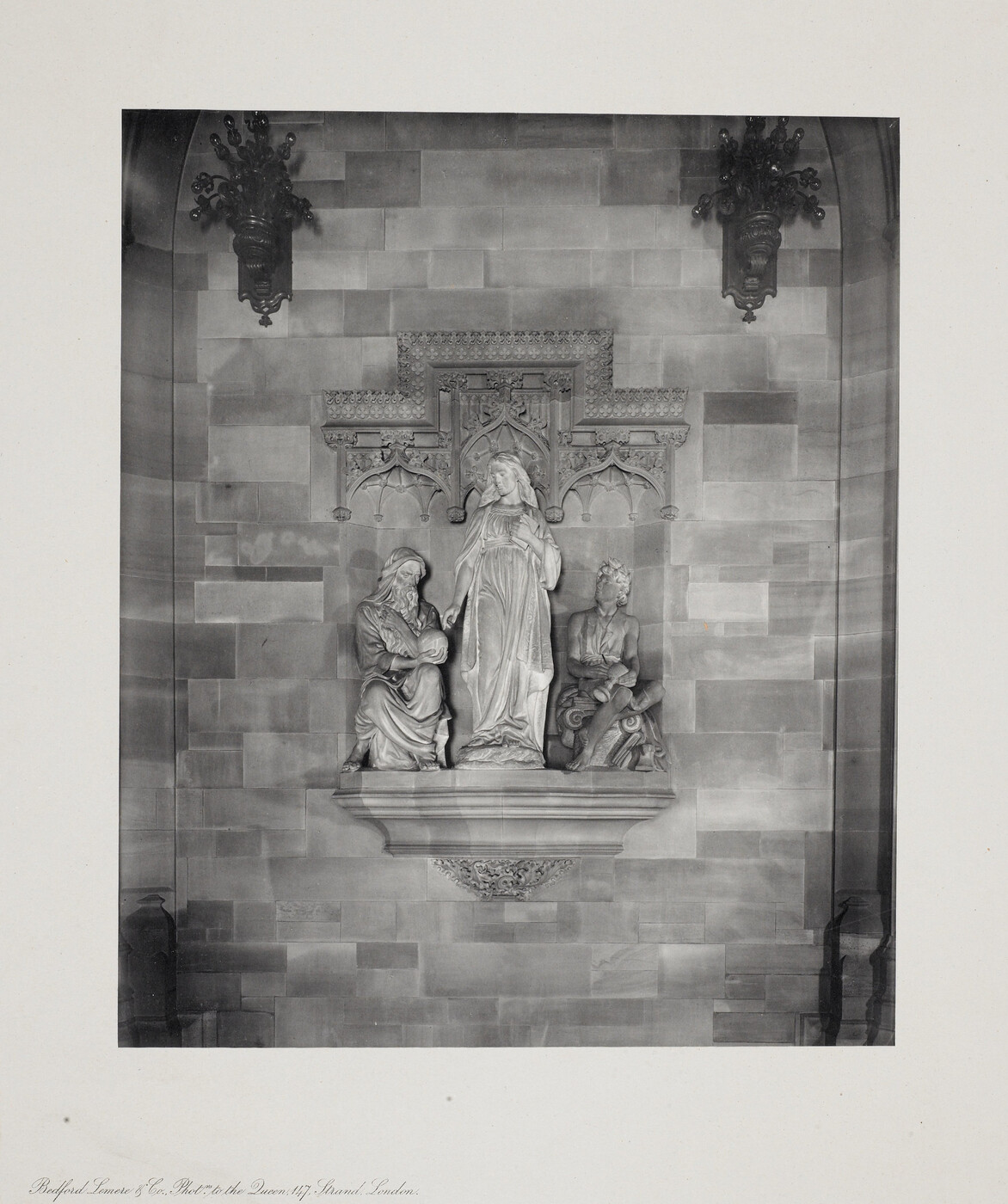
This photograph shows the finished statue by John Cassidy. The revised design is more dramatic than the original clay model. This photograph was taken by Bedford Lemere & Co., a renowned firm of architectural photographers. It was rejected from the official portfolio of photographs of the building.