
The secret millionaire
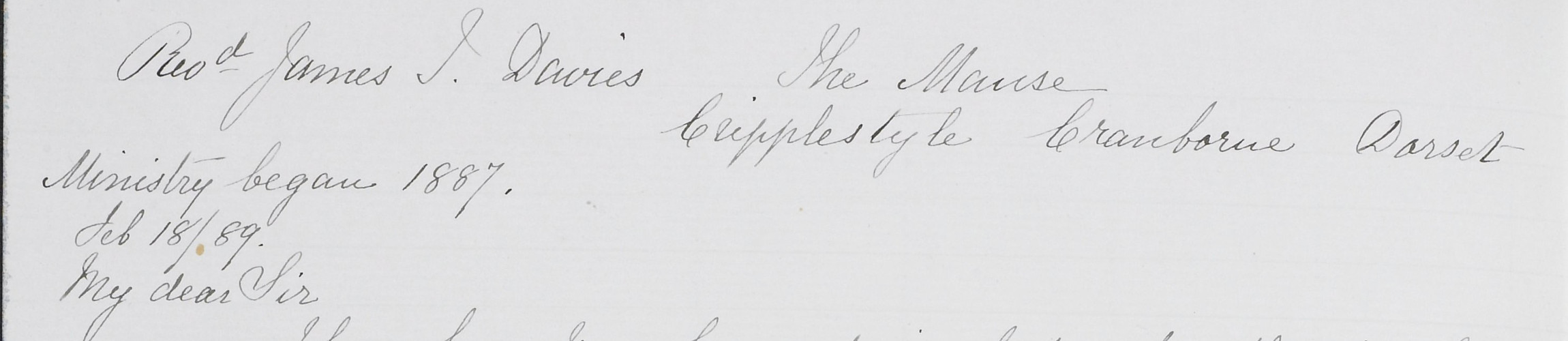
Letter from Reverend James J. Davies (JRL6/1/1/4)
After Enriqueta died, her friends told stories about her secret kindness. One of these was about a minister who was engaged, but was too poor to marry. Enriqueta visited him secretly to find out about his life. Then she sent him money for his chapel, and furnished his house so he could get married. The minister never knew who had helped him.
Although Enriqueta kept her philanthropy secret, she created meticulous records to ensure her charity was useful. Her friend described volumes “in her own perfect calligraphy filled with details as to ministers and their wives and families, who had been entertained by her in her holiday home at Ryde.” Sadly, these volumes were destroyed with Enriqueta’s personal papers.
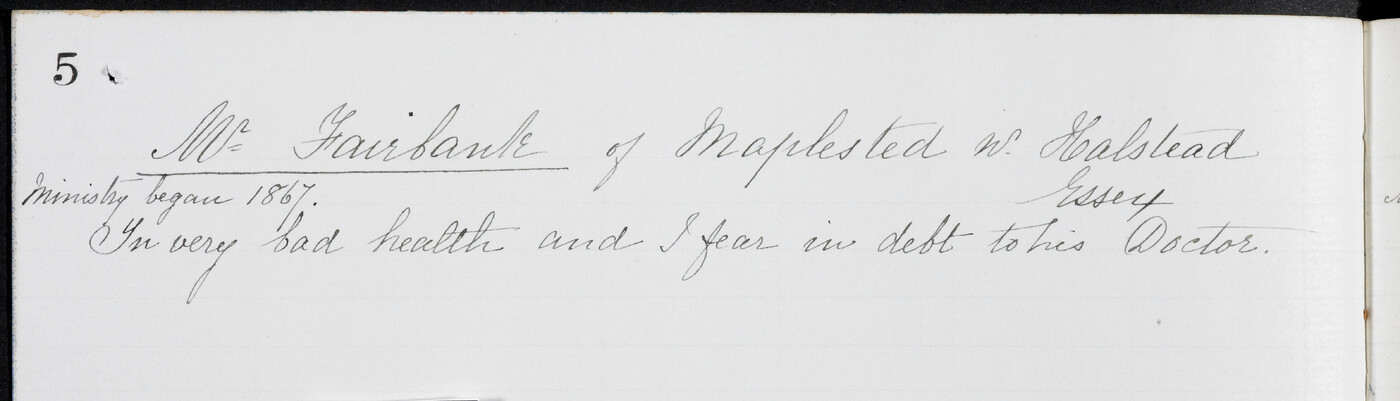
Luckily some evidence of her anonymous giving was preserved by accident in the Library’s archive. In the book below, Enriqueta recorded details of the lives of poor ministers so she could decide how to help them. This page shows a letter from James Davies, a Dorset minister, describing his circumstances. He is probably the minister who Enriqueta secretly helped to get married.
Because Enriqueta also used this book to keep library accounts, it was given to The John Rylands Library. In other books, pages were cut out if they contained personal information. Here, the pages were hidden by being pinned together (you can see the holes in the corners).
She delighted to do good in secret
JRL/7/7/2 Cuttings Book, 1889-1908 p. 113: Manchester Guardian 5 February 1908, p. 5.
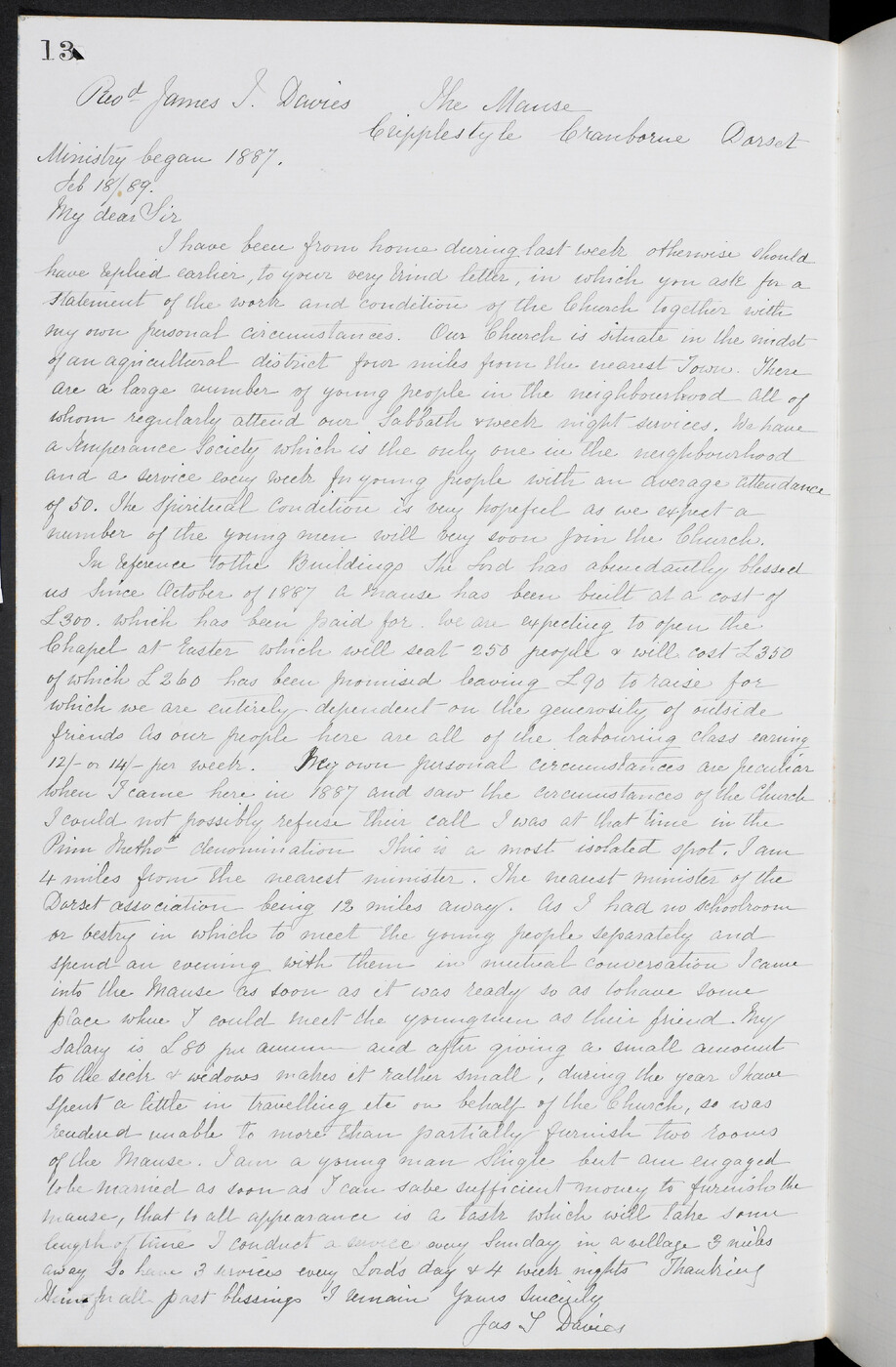
This is an entry from Enriqueta's book containing records of the ministers she helped. It relates to a Mr Fairbank of Maplested in Essex whose ministry began in 1867. Enriqueta writes that he is "in very bad health and I fear in debt to his doctor".
The story of “Mrs. Farmer” and the poor ministers
Her friend C. Silvester Horne wrote in his diary:
She seems to live for other people. What do you think of this? She takes a pseudonym and goes down to Dorset as Mrs. Farmer to visit the poor ministers. She proceeds to act the good fairy. Libraries begin to appear in meagrely furnished studies, comforts of various kinds, and all from the same mysterious donor.
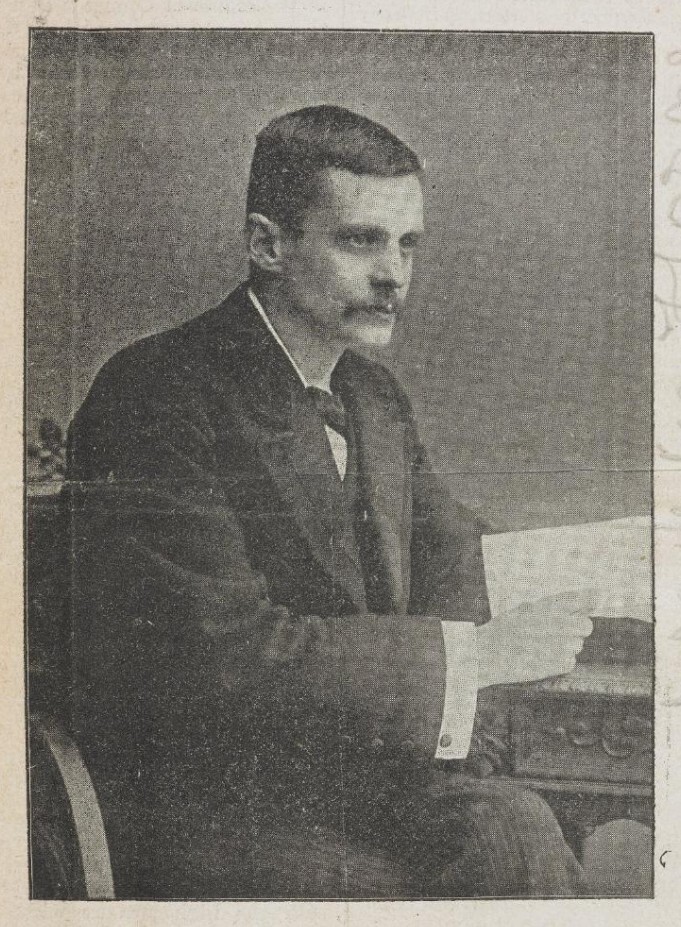
Horne was the minister of Kensington Chapel. He shared with Enriqueta a love of books.