
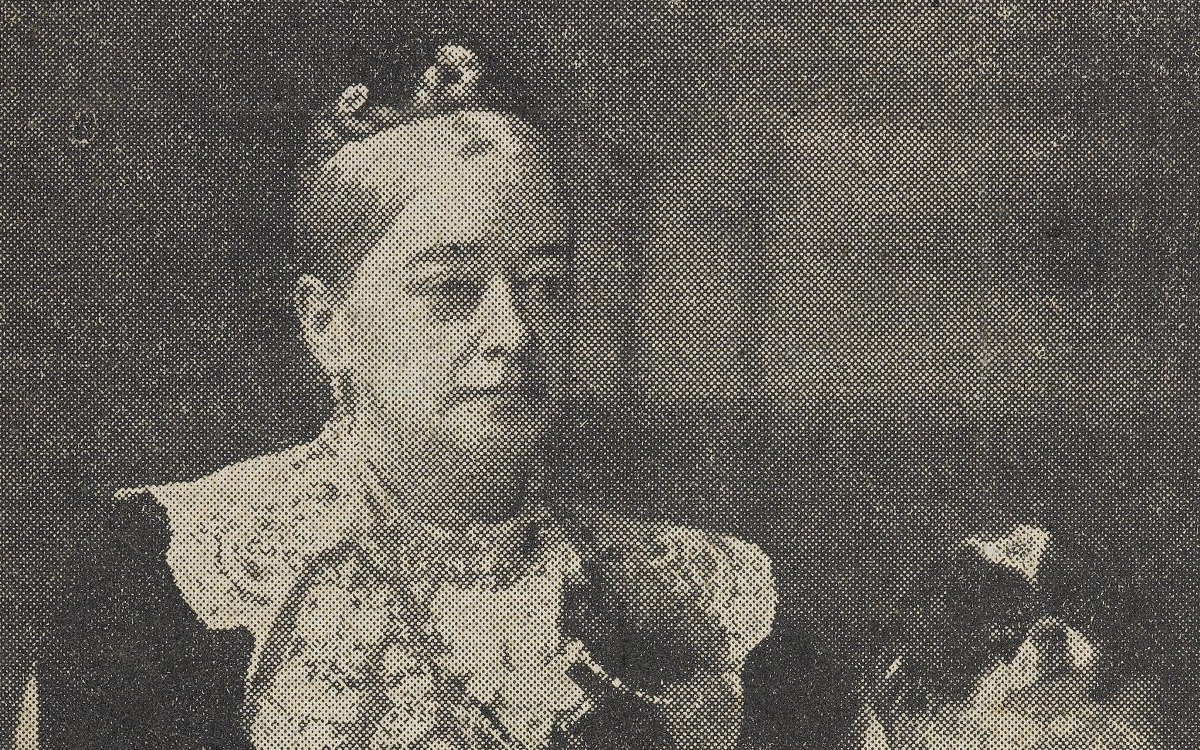
Newspaper cutting: portrait of Enriqueta Augustina Rylands, (JRL/7/7/2)
Who did she think she was?
When somebody does something important and unique, we wonder what they thought about themselves.
When Enriqueta died a hundred years ago she did not leave a diary or any personal papers. To get an idea of her personality we can look at the things she held dear. Her paintings, her books, her friends and family, all hold clues to her inner thoughts.
“Never holding herself aloof from poverty and helplessness”
Joseph Parker, ‘John Rylands of Manchester’. Daily News (London), 7 October 1899, p. 8.
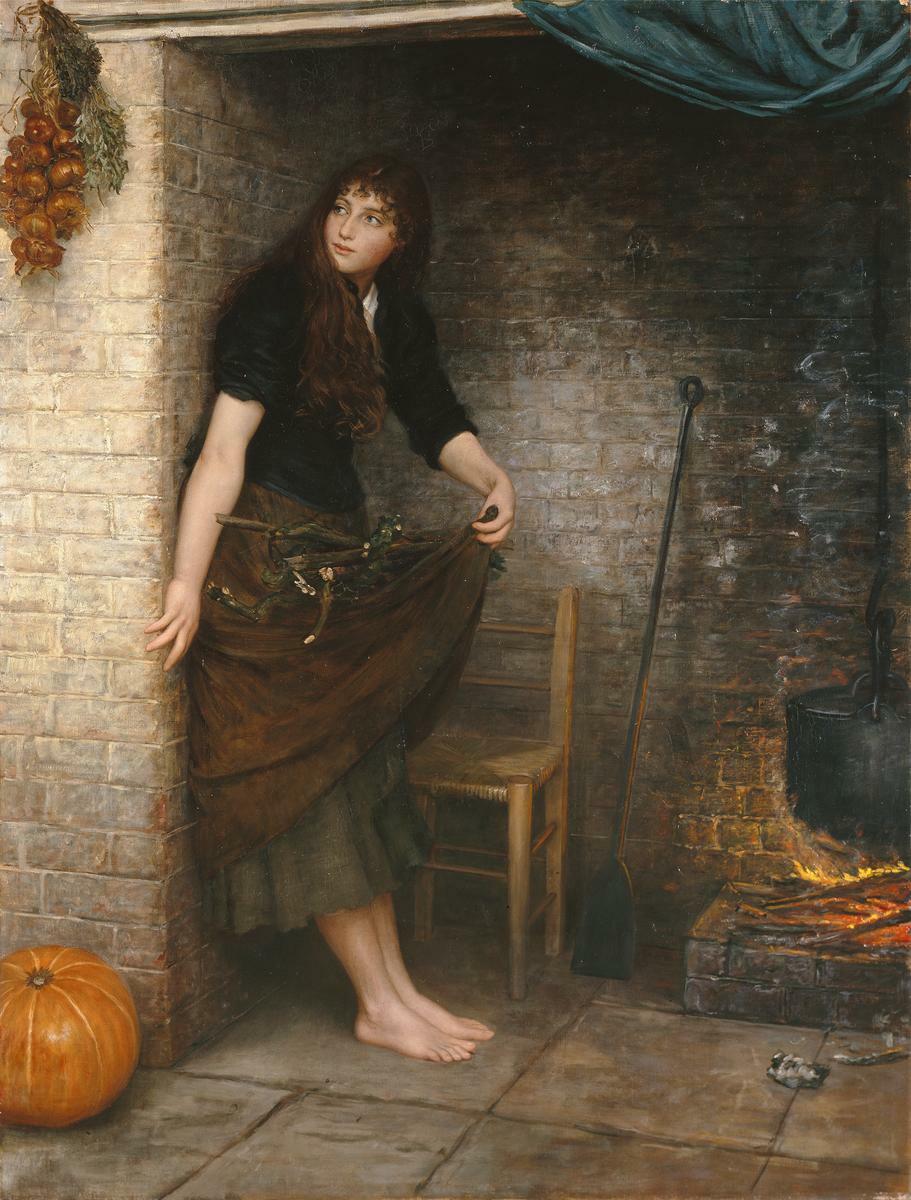
Enriqueta gave this painting of Cinderella to the Manchester Art Gallery. The image of an oppressed young girl contrasts strongly with our image of Enriqueta Rylands, the wealthy widow.
Could she have identified with the hard-working girl rescued by a prince? Enriqueta’s life was, in many ways, a Cinderella story. Her childhood was certainly difficult, but her strength of character won her the love of John Rylands – a merchant prince, if not a handsome one.
© Image courtesy of Manchester Art Gallery
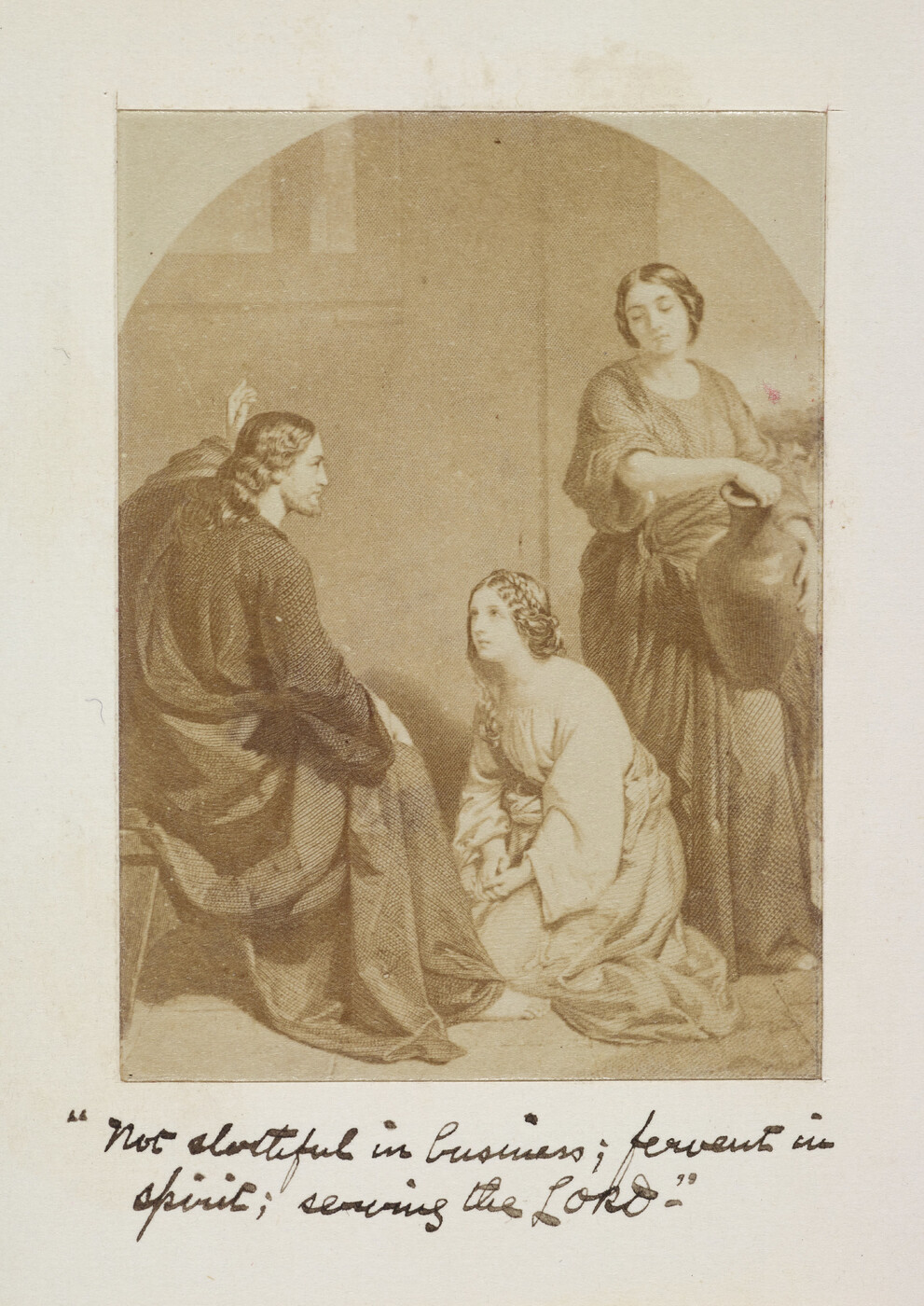
The women in the Bible provided exemplars for Victorian women. Mary and Martha, shown in this illustration, exemplified ideals of spirituality and domesticity. Enriqueta included this image in her extra-illustrated Collects, Epistles and Gospels (R27130), adding a caption: “Not slothful in business; fervent in spirit; serving the LORD”. This text, from the book of Romans in the Bible, was associated with masculine ideals of work and public life.
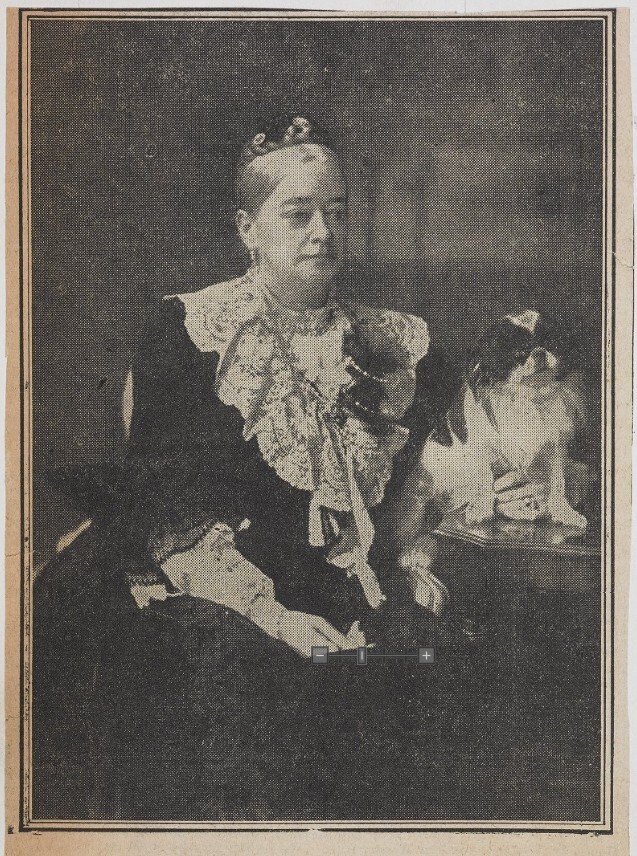
This photograph was printed to accompany a newspaper obituary of Enriqueta. She is pictured with a spaniel, probably the pet dog she acquired in 1897, when Arnold Green wrote to her saying "I am glad you have at last found a pet dog to satisfy you. It must be a beautiful little animal".
Sometimes Enriqueta seems like a solitary figure. In reality, she was surrounded by friends and family.
© Image courtesy of Manchester Art Gallery