

The John Rylands Library
Library Plan - Gallery (JRL/5/2/10)
Enriqueta inherited over two million pounds in her husband’s will. She used part of this fortune to build a memorial to him. That this monument should take the form of a library is remarkable and unique in Britain.
John and Enriqueta were both book lovers, who shared a common wish to improve the education and spiritual life of the people of Manchester. With this in mind she conceived the idea of a library for Nonconformists in the city.
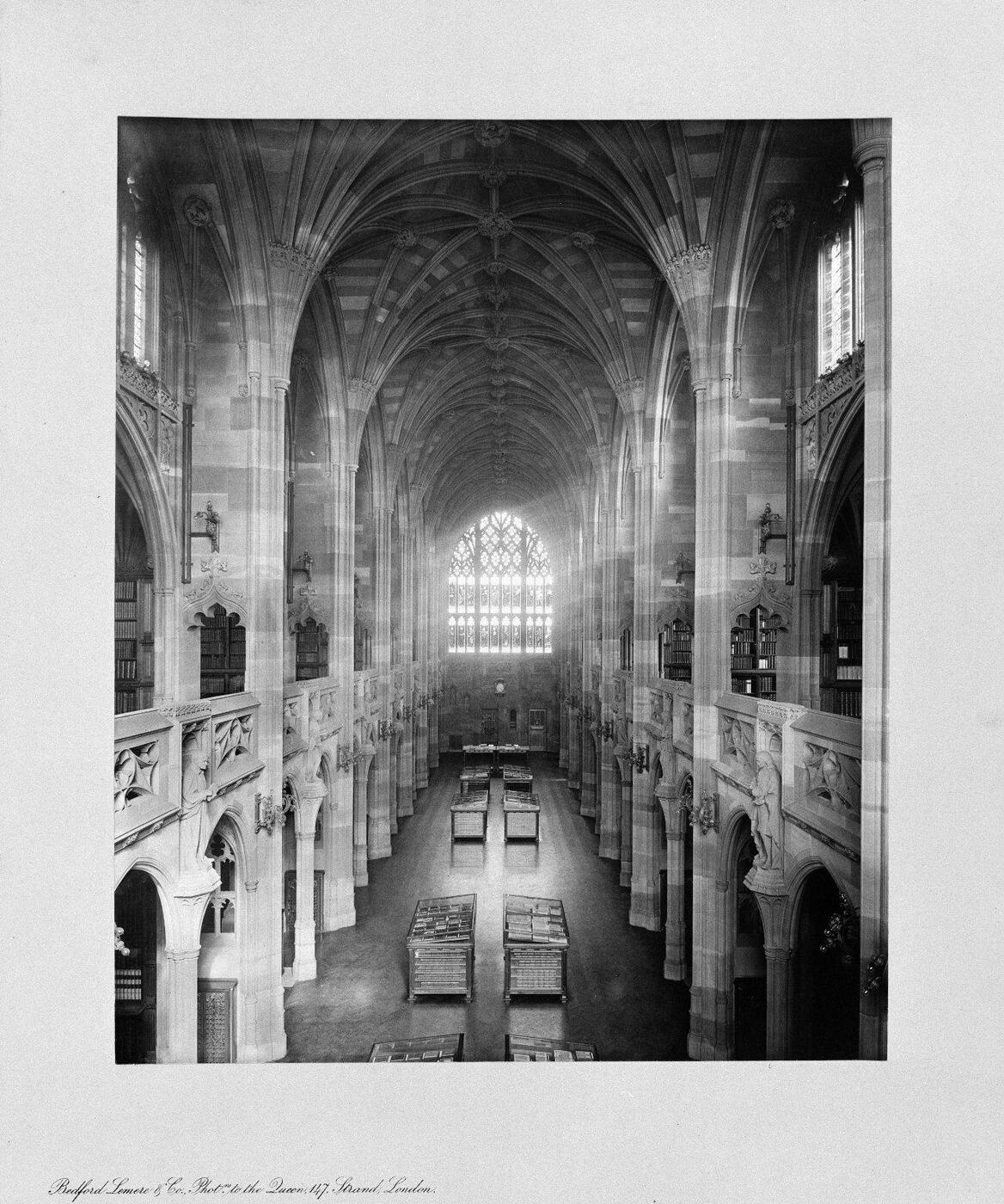
Enriqueta wanted her library to rival the ancient libraries of Oxford and Cambridge. She chose the Gothic style to create an instant sense of heritage; her library would resemble the old libraries in monasteries, cathedrals and colleges.
Readers would be lifted both physically and spiritually from the daily grind and noise of Deansgate into a realm of higher peace and learning.
She engaged the architect Basil Champneys. He designed the Library in a week, although it would take ten years to build. Enriqueta paid close attention to every aspect of the design. She insisted on the finest materials and every element of the building was lavishly decorated.
She frequently argued with Champneys. Anything that did not meet with her approval she ordered him to change, almost regardless of cost. In particular she was troubled by the “high church” appearance of the Library. As a devout Noncomformist she insisted her architect tone down some of the more church-like features.
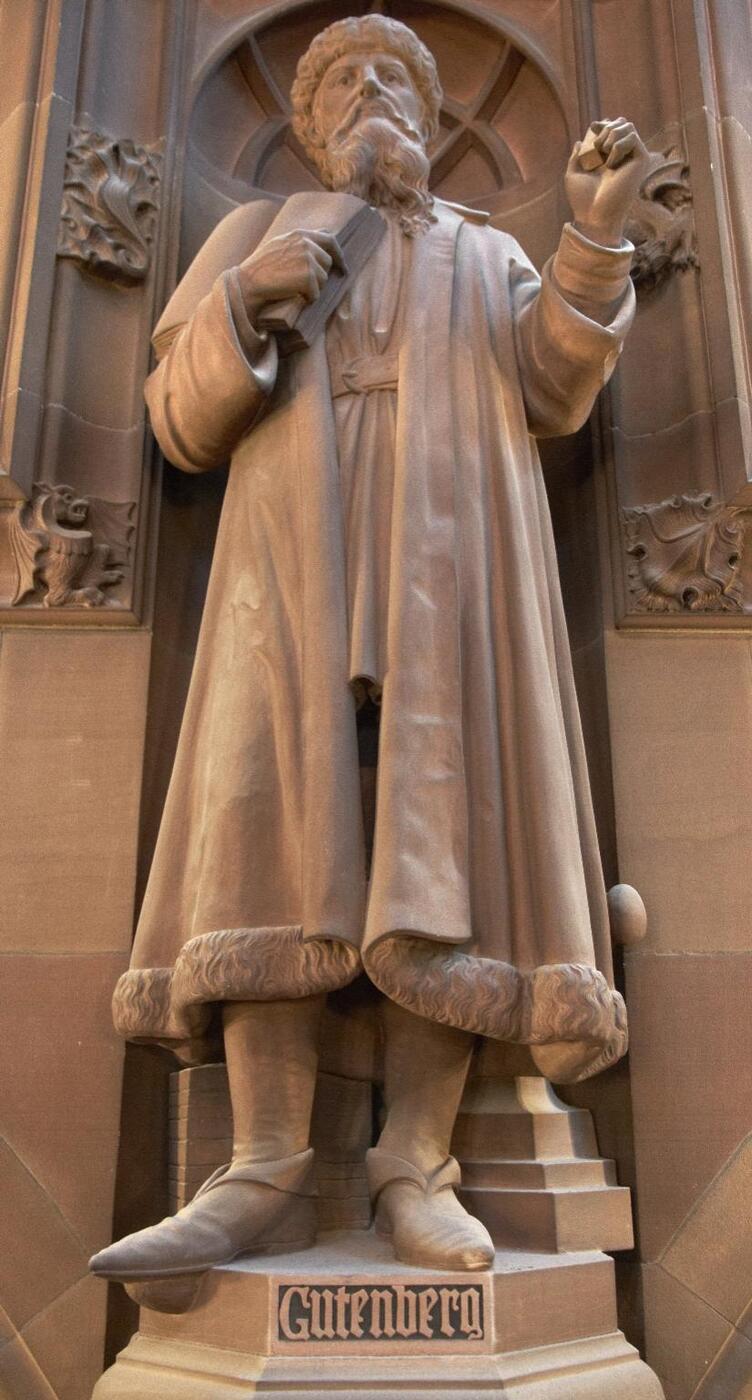
All the figures represented in the Reading Room were chosen by Enriqueta, with the exception of her own statue which was erected shortly before her death.
The statues which overlook the Reading Room represent men of learning from ancient and modern times. To mark the history of printing the English printer William Caxton faces the inventor of moveable metal-type printing, Johann Gutenberg.
The sculptor, Robert Bridgeman, had to contend with Enriqueta’s intervention concerning the historical accuracy of the figures. She insisted that Bridgeman shorten Gutenberg’s “long, pointed shoe” and lengthen his beard to match her preferred likeness.
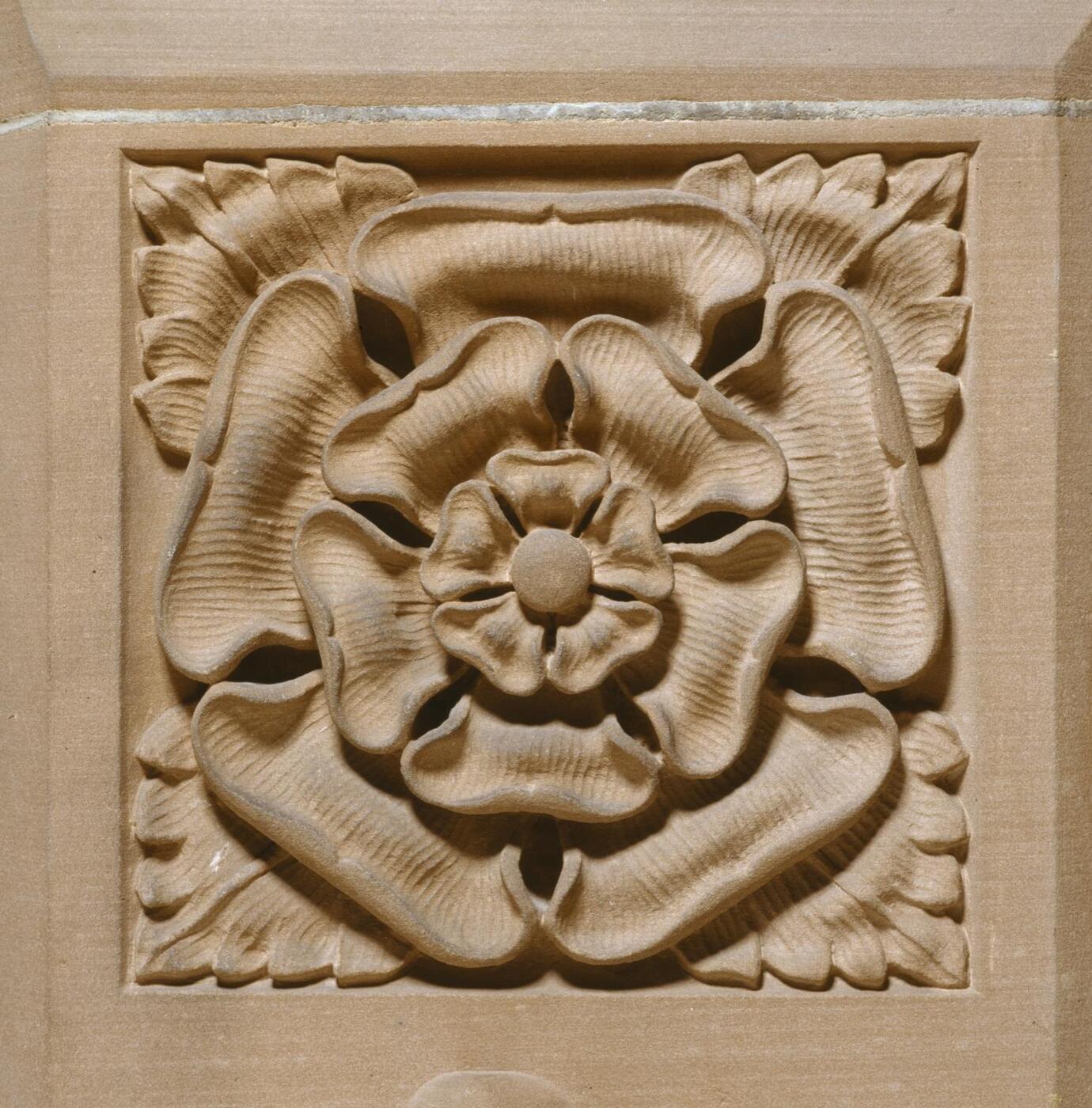
John was proud of his Lancashire roots. Enriqueta wanted to reflect this in her building and the red rose of Lancashire is repeatedly found in the stained glass and carvings.
Although the architectural style emulates the ancient, Enriqueta demanded the latest technology for the building. It was one of the first in Britain to be designed and constructed with electric lighting. Electricity was cleaner and safer than gas, both important considerations for a special library.
It also had an advanced heating and ventilation system. The air was drawn in at street level and filtered through coke screens which were kept moist by water sprays. The clean air was then warmed over heated batteries and circulated throughout the building via the radiator grilles. Foul air was extracted by electric fans.
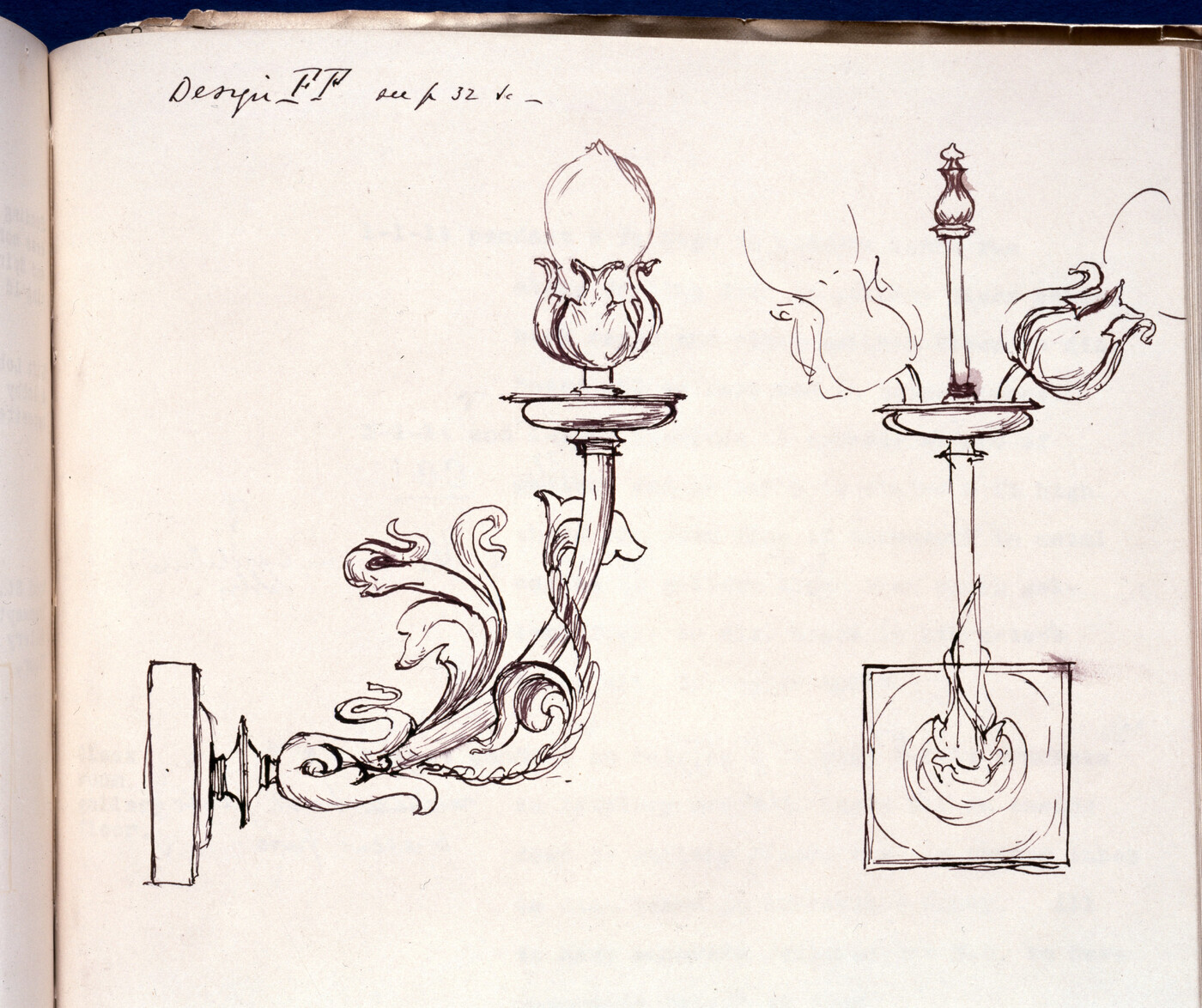
This sketch shows an early design by Champneys which Enriqueta rejected in favour of designs by J.W. Singer & Co. of Frome in Somerset. The tulip-shaped, sixteen-candle-power lamp appears to flower from the foliated Art Nouveau bronze light fitting.