

Caribbean Uprisings and Post-Emancipation Legacies
Map of British Guiana, 1893, MMGS: H (139)
The Gladstone family were one of the richest and most powerful in 19th-century Britain. They gained their fortune through businesses including the ownership of plantations and enslaved persons. Jack Gladstone (c1793 – unknown) was a man enslaved on a Gladstone plantation in Demerara (present day Guyana), where he was given the family name. Jack led one of the largest uprisings in the British Empire.
Wealth, power and status passed through generations of the Gladstone family including to Murray Gladstone (1816-1875), a funder and Trustee of Owens College and active participant in its extension. Today the land provided by Murray stands as physical evidence of the legacy of slavery at the University.
Jack Gladstone was enslaved on Plantation Success, ‘owned’ by John Gladstone. This area was known as one of the most violent colonies in the British West Indies. The pamphlet details these conditions as driving forces in the uprising.
After the abolition of slavery John Gladstone (Murray’s uncle) submitted 11 different claims and made an estimated £106,769 (over £10 million today) from government compensation; those enslaved on his plantations received no form of compensation.
On the evening of 18 August 1823, Jack Gladstone led an uprising with approximately 10,000 enslaved men and women. Court transcripts of the trial following the Demerara Uprising provide a valuable, though second-hand, insight into the motivations of the enslaved abolitionists as well as the draconian response from local law enforcement.
This book details the questioning of Bristol, an enslaved man from Chateau Margo plantation, on October 17th 1823.
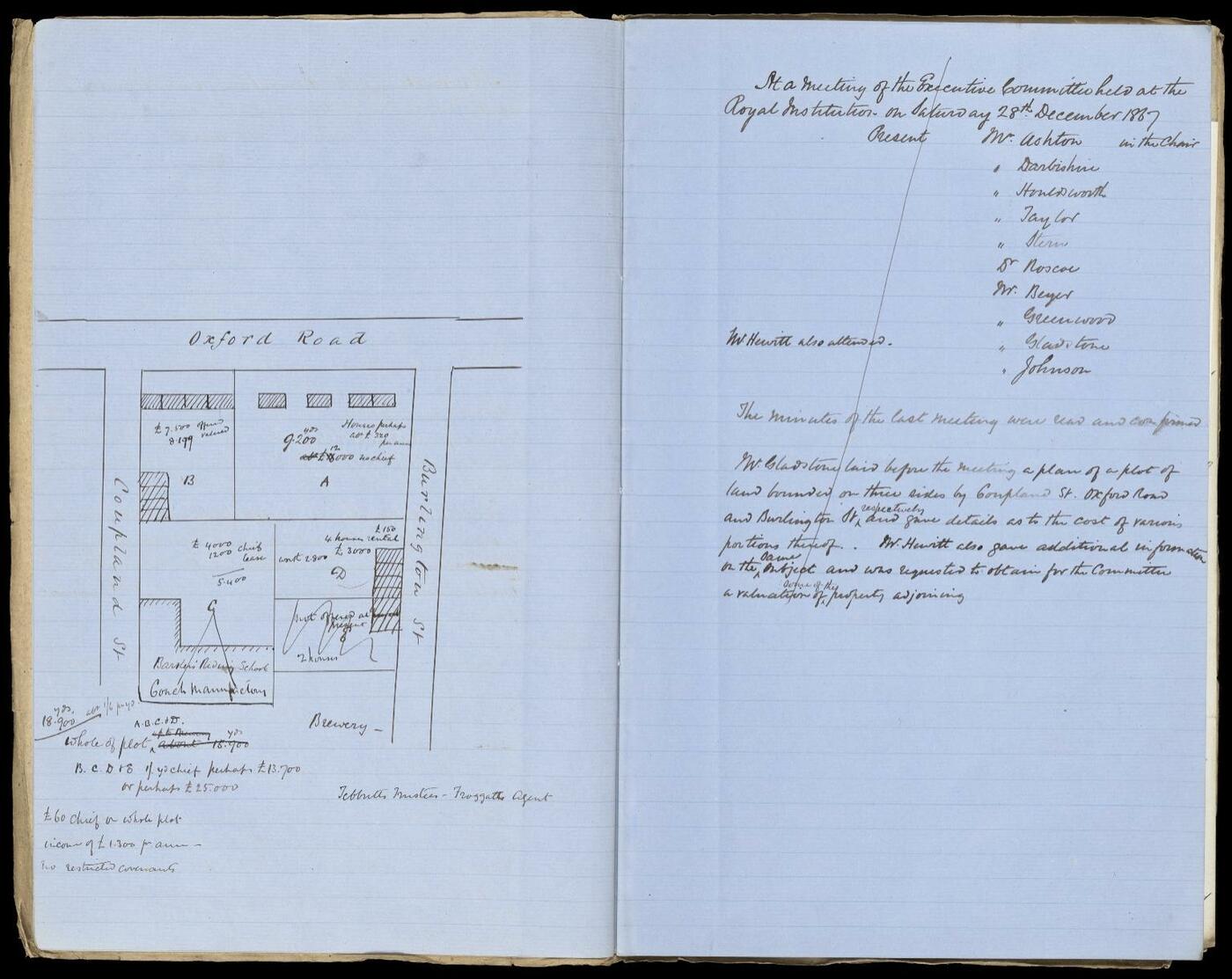
These minutes show discussion about new sites for the extension of Owen’s College. It reads, ‘Gladstone laid before the meeting a plan of a plot of land, bounded on three sides by Coupland Street, Oxford Road, and Burlington Street respectively...’ By March 1868, Murray Gladstone had independently purchased land in his own name at a cost of £29,100, over £2.7 million today.
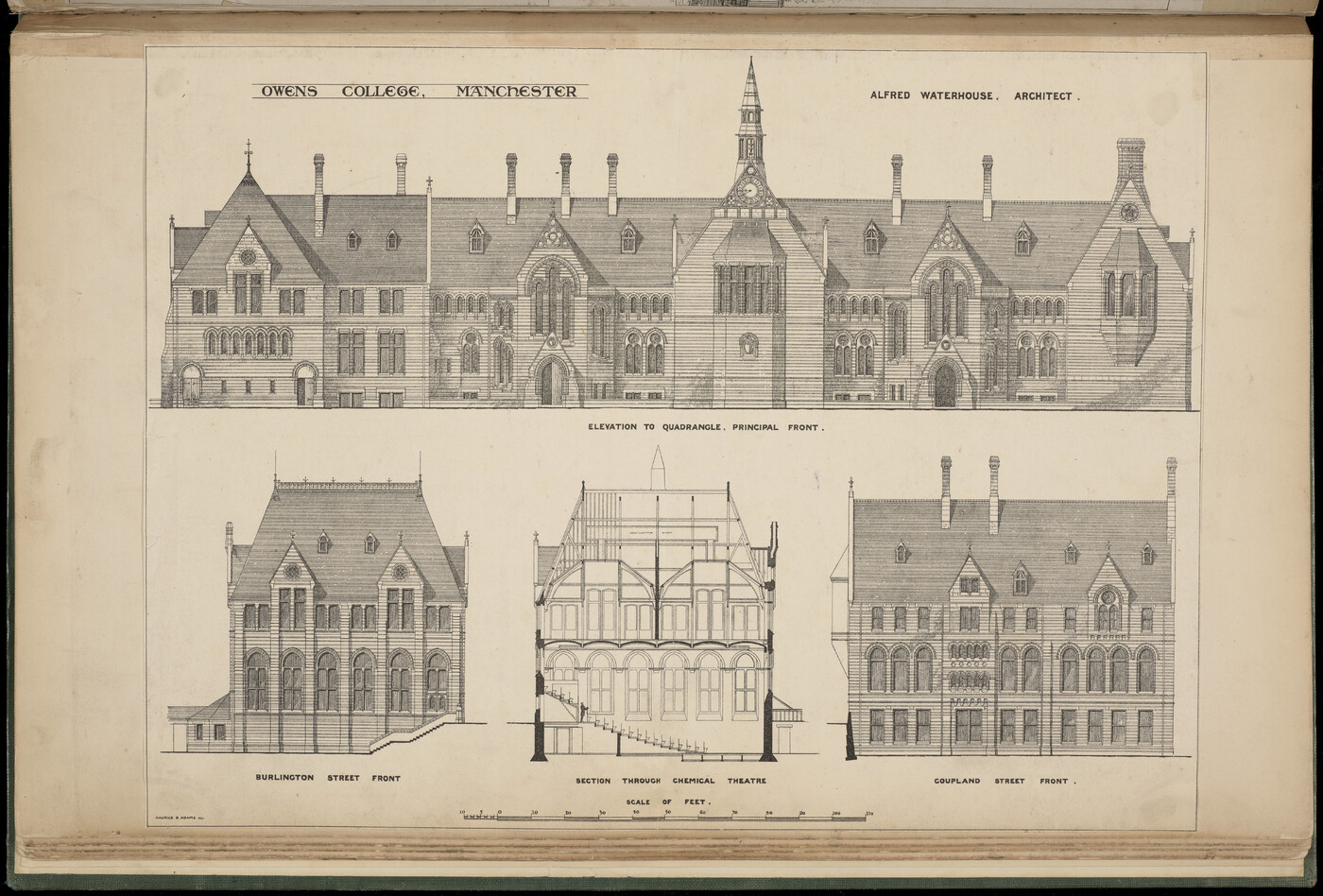
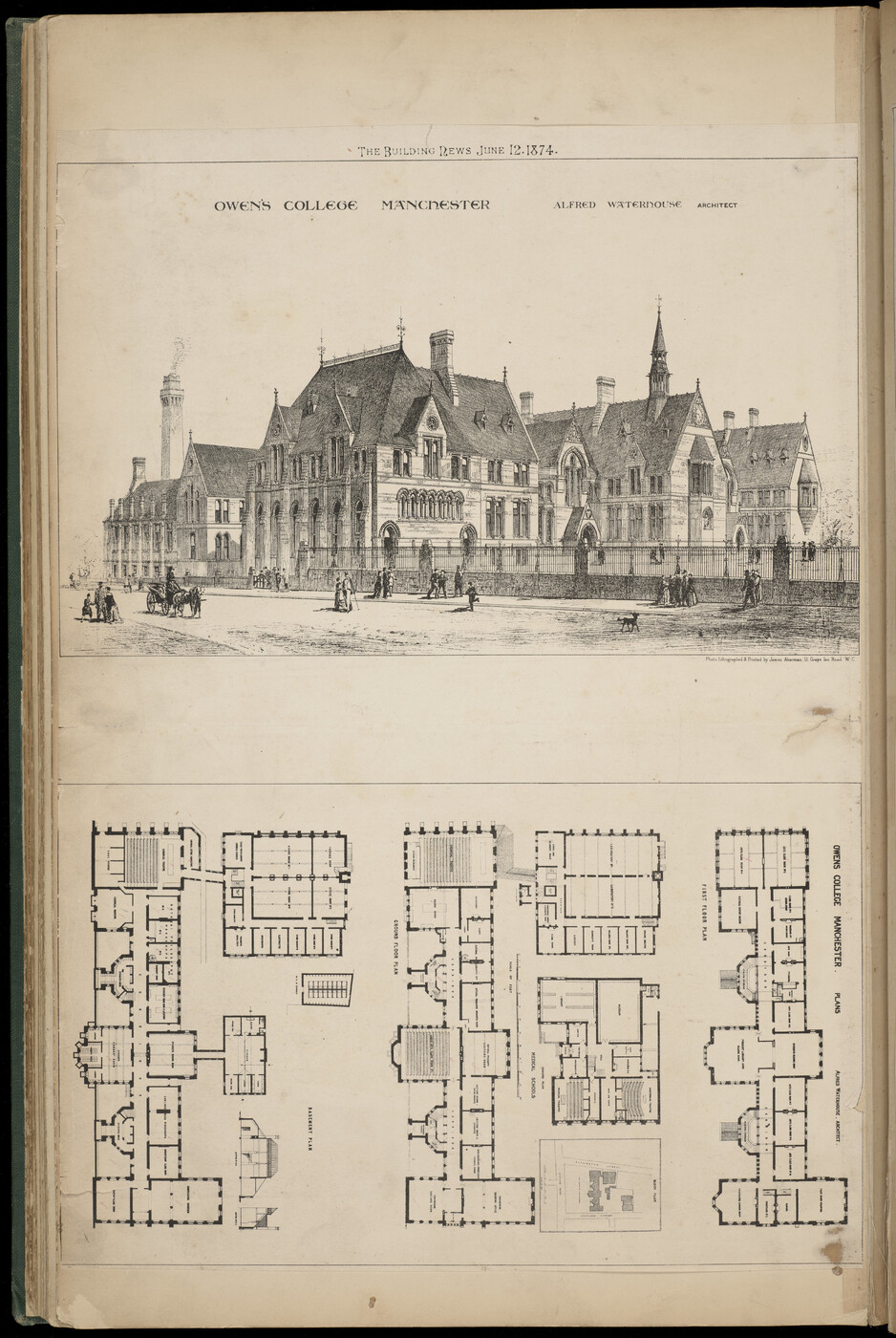
This plan shows architect Alfred Waterhouse’s design for the new Owens College built on land purchased by Murray Gladstone. Today, the building is known as the John Owens building. Waterhouse, also the architect of Manchester Town Hall, was the son of a Liverpool cotton broker. His father filed two unsuccessful claims for compensation following the abolition of slavery in 1834.