
Satanic Mills
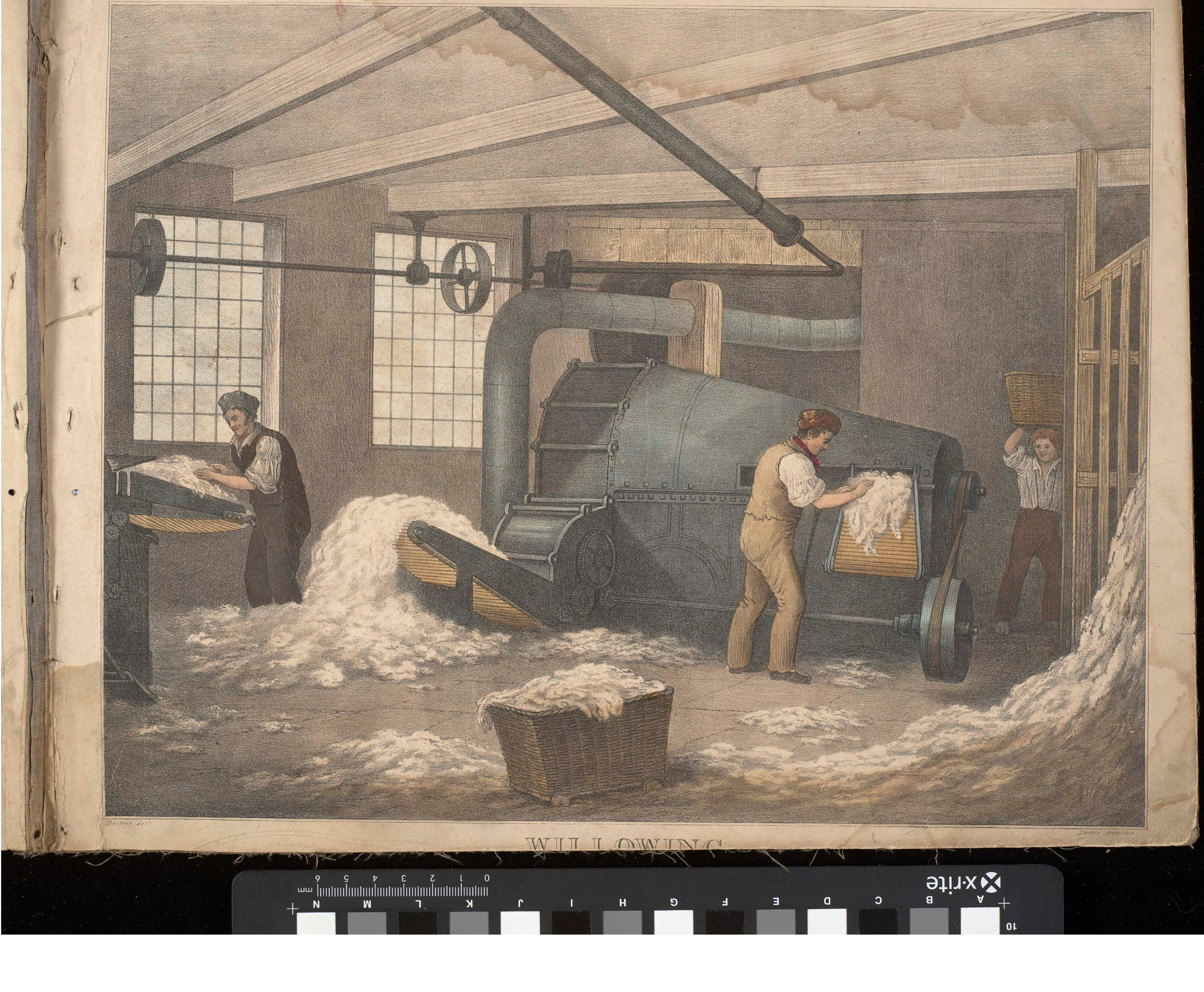
'Willowing' from Progress of cotton, Barfoot, James Richard. c1840, R233188
The company of McConnel & Kennedy was founded in 1795 at an important technological moment, as steam power fuelled the emergence of Manchester’s age of the cotton mill. They were spinners who took raw cotton fibres and spun them into thread for other manufacturers to weave cloth.
The materials that enslaved labourers produced and packed were a thread that linked them to thousands of workers in Manchester, who handled and constantly breathed in those American-grown fibres. McConnel & Kennedy’s workers and their families lived in overcrowded and unsanitary accommodation in close proximity to the noisy, smoky mills.
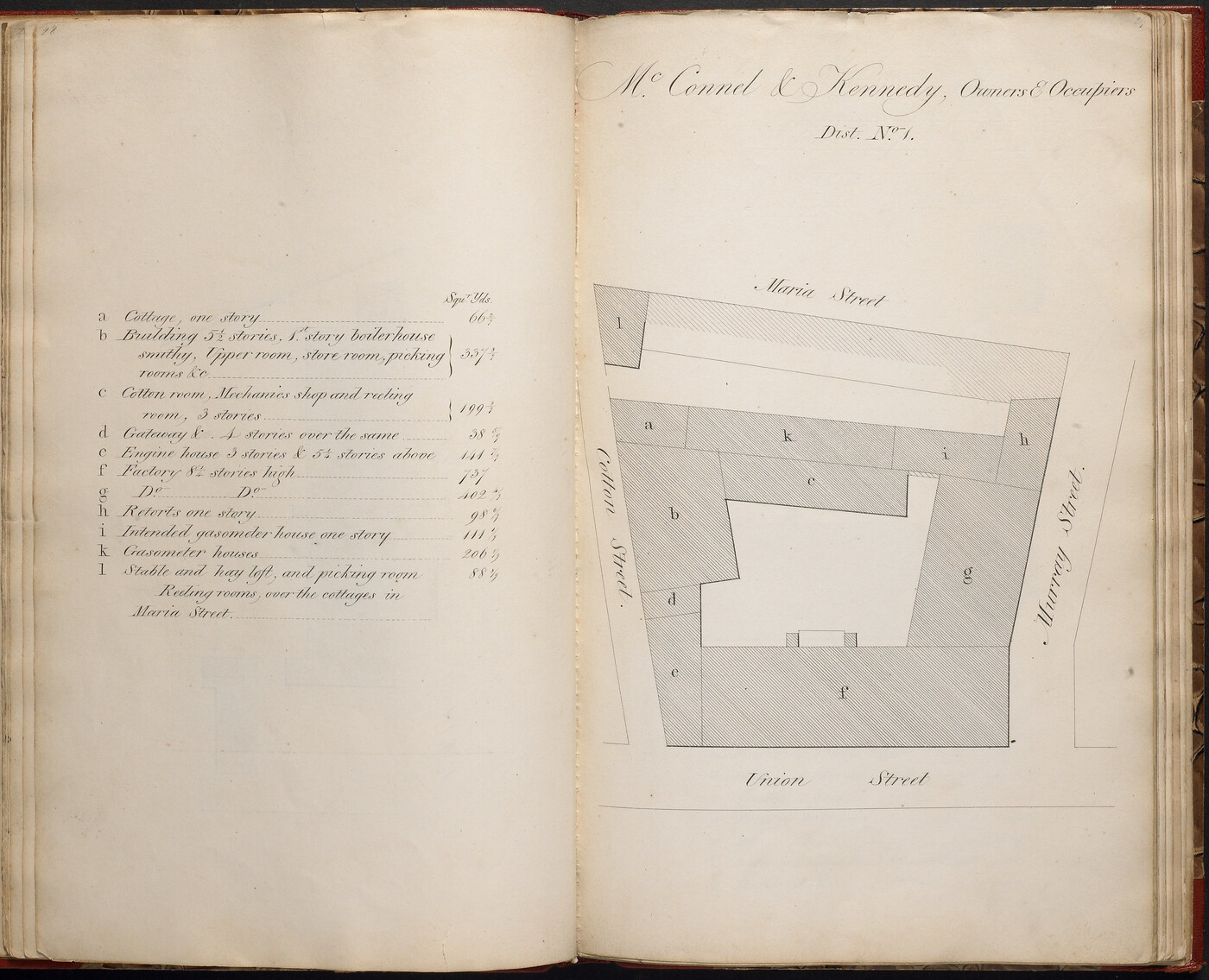
These plans show the layout and uses of the firm’s buildings in Ancoats. McConnel & Kennedy relied heavily on the labour of children and women paid a fraction of men’s wages. By 1836, the firm employed 1,590 individuals with nearly 200 workers under the age of 15.
This list documents leading Mancunian manufacturers and businessmen who funded and supported the Institution, demonstrating over 25 years of commitment from James McConnel and John Kennedy.
Three daughters of John Kennedy connected the families of donors in this exhibition. Margaret married Henry McConnel, Mary married Samuel Robinson, and Annie married James Heywood (brother of Sir Benjamin).
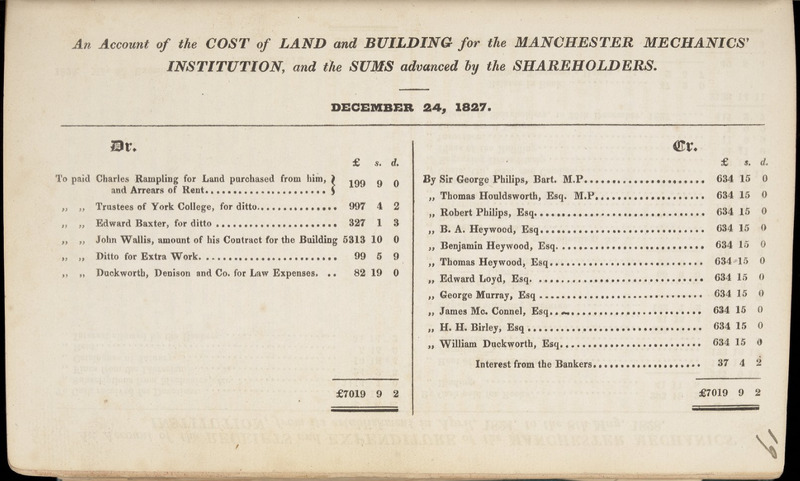
In 1827, James McConnel was among shareholders who each advanced £634 (£58,800 today) to support the creation of a purpose-built home for the Manchester Mechanics’ Institution.
The other donating shareholders included three of the Heywood banking family, cotton manufacturers, and Sir George Philips (1766-1847), enslaver of 95 people on his plantation in Jamaica.