

Manchester Mechanics Institution and the Transatlantic Slave Trade
Crow's back view of centre of Manchester, 1882, R174924
Sir Benjamin Heywood was a founder, president and substantial donor to the Manchester Mechanics’ Institution.
The Heywood family had five generations of wealth tied to the transatlantic slave economy. This wealth derived from direct investments in the trade of enslaved African people; investments in Manchester’s ‘Africa goods’, banking and cotton industries; and marriages.
Amongst Benjamin Heywood’s contributions to the Institution were 42 books presented in 1829 and a donation of £634 15s (at least £60,000 today) in 1832, an amount matched by his uncle and brother. Heywood’s extended family, whose wealth also derived from enslavement, contributed £1904 5s (at least £178,000 today) to the building fund.
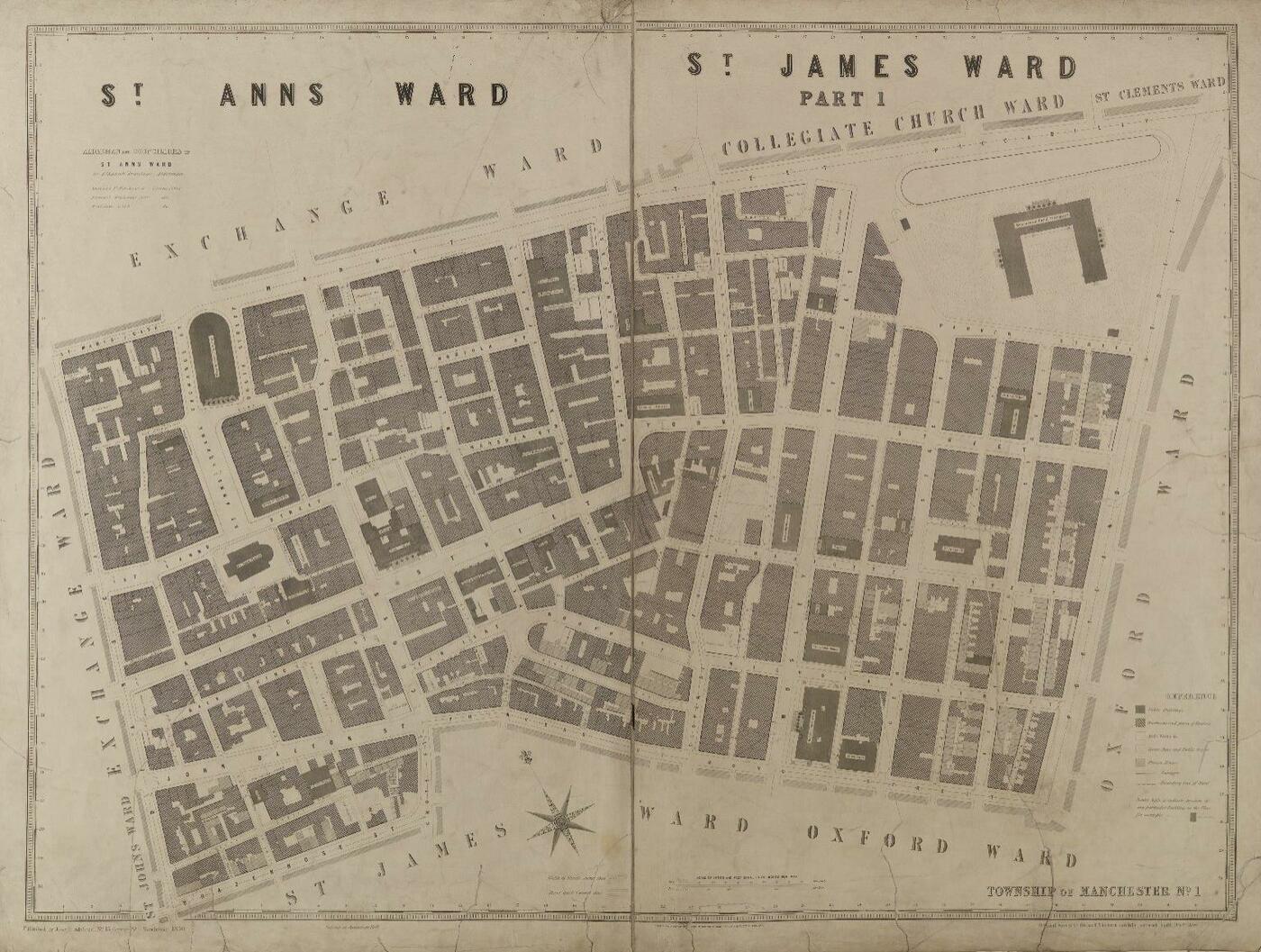
This map shows the location of the Heywood Bank located in St Ann’s Square, Manchester. The profits from the Heywood family’s investment in slave trading funded their banks in Liverpool in 1773 and Manchester in 1784. The banks provided financial services to textile merchants who imported cotton grown by enslaved people.
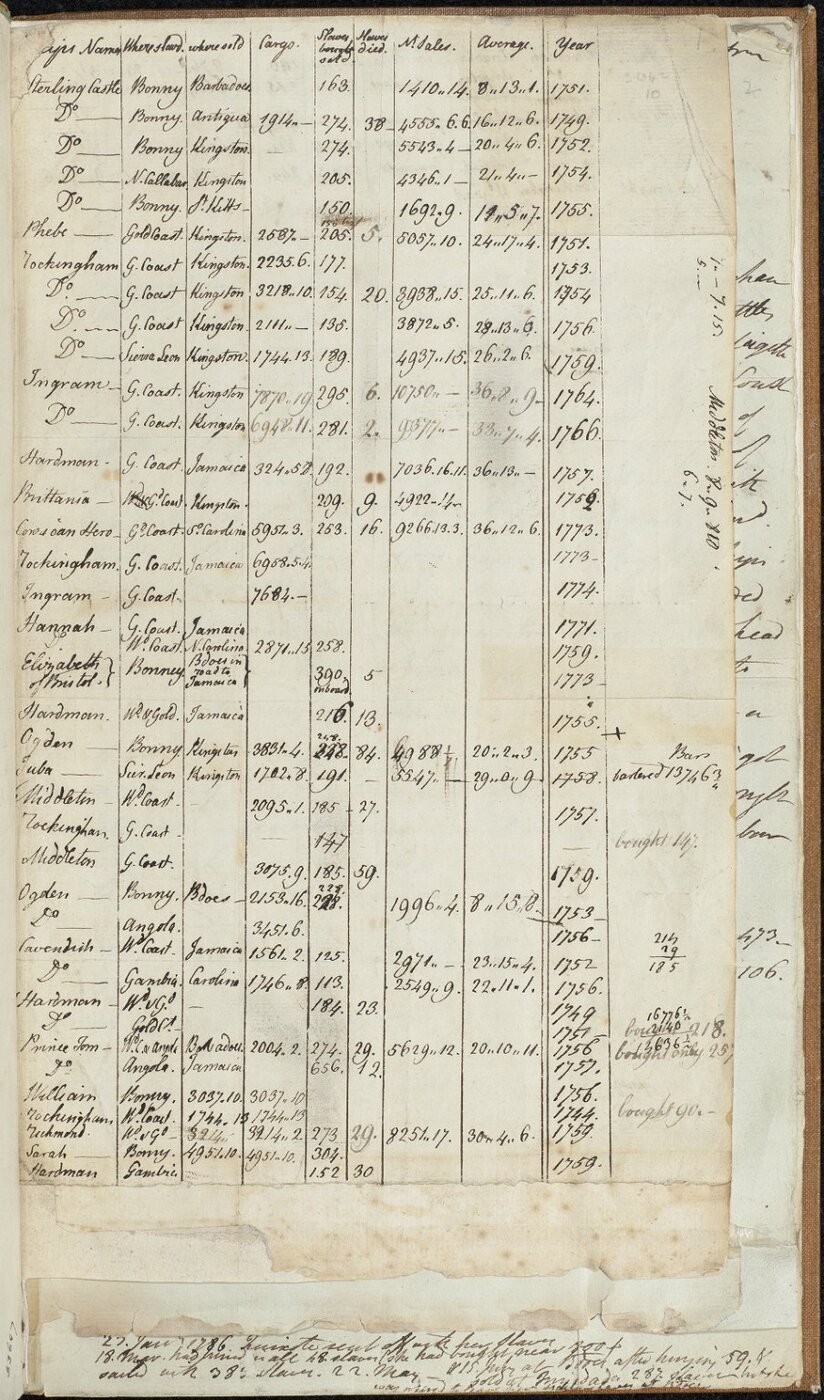
This document includes notes and statistics on voyages involved in the capture and transportation of enslaved African people from West Africa to the Americas. The Heywood family would have invested in similar voyages.
Between 1744 and 1788 the Heywood’s invested in 133 voyages and were connected to the enslavement of an estimated 42,000 people. An estimated 6,000 of those people died before reaching the Americas.