
Pro-Slavery Partnerships
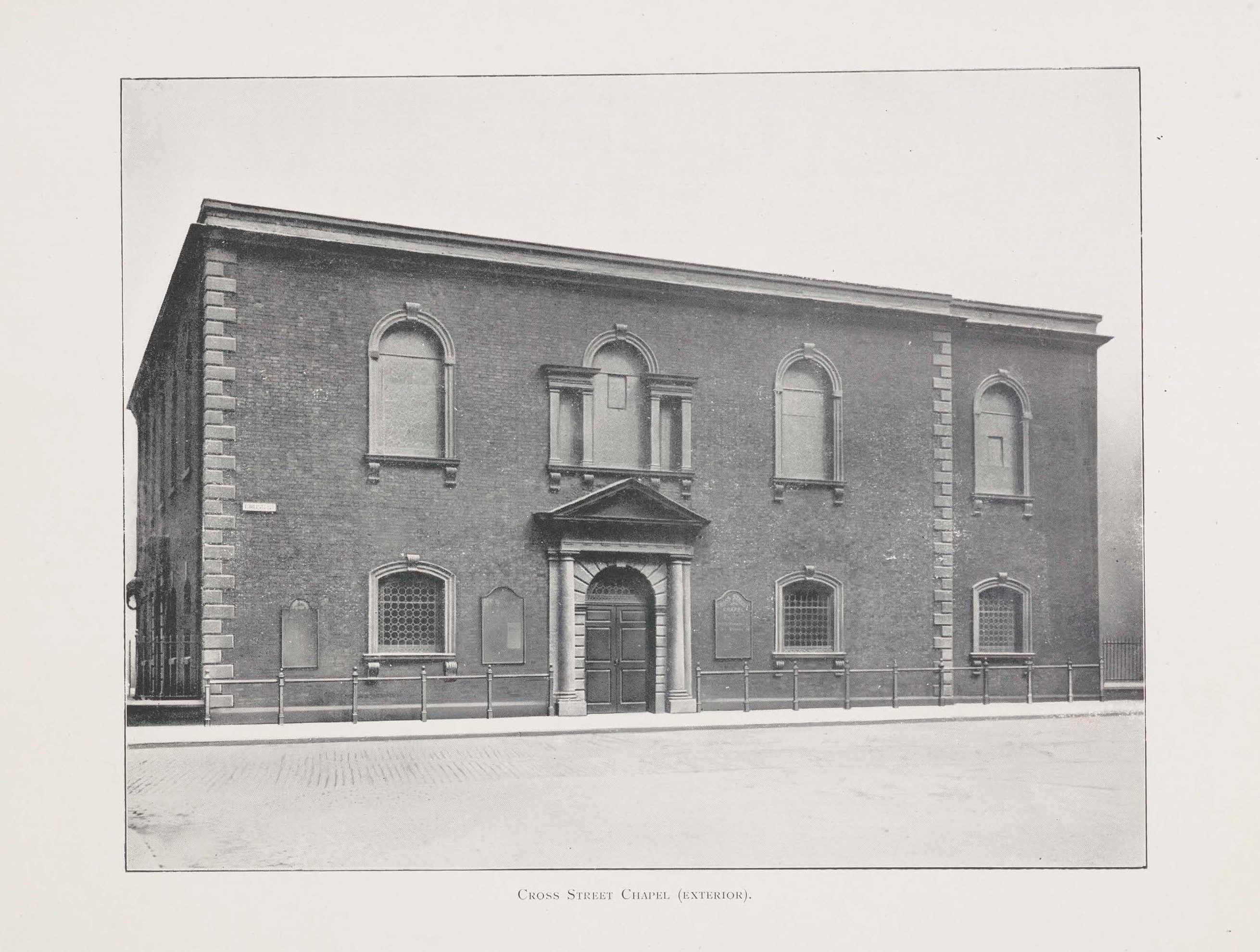
Image from Illustrations of Cross Street Chapel, 1917, UCC (1801-) N256
Manchester is known for its radical abolitionist movement and support for the Foreign Slave Trade Abolition Bill. However, pro-slavery sentiments were also widespread. The city’s cotton industry was embedded in the transatlantic slave economy. Among those supporting slavery were some of the founders and benefactors of the University’s predecessor institutions.
Thomas Robinson (c1757-1831) was a Manchester-based merchant listed on the Manchester Mechanics’ Institution Board of Directors in 1828. Robinson partnered with the Heywood family to supply merchants with textiles to be taken to the West African coast, in exchange for enslaved people. They also collaborated politically to oppose the abolition of the slave trade.
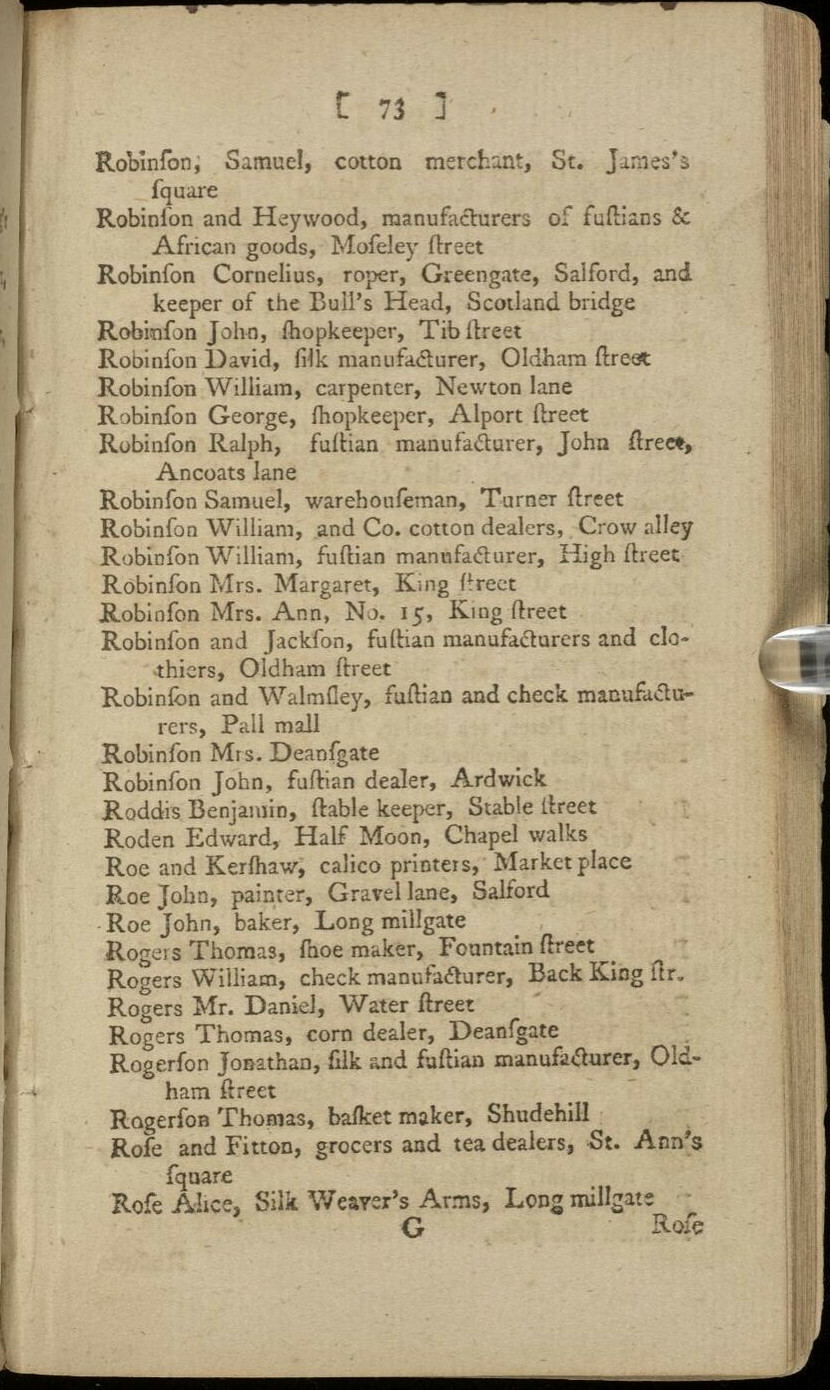
This directory lists Robinson and Heywood as manufacturers of ‘African goods’, which in Manchester, meant textiles. Traders of enslaved people would take these textiles and other goods, such as alcohol, beads, cowrie shells, and firearms as barter for captured people and goods, including cotton. Upon the ship’s return, merchants would buy this cotton and produce more textiles to sell back into this exploitative market.
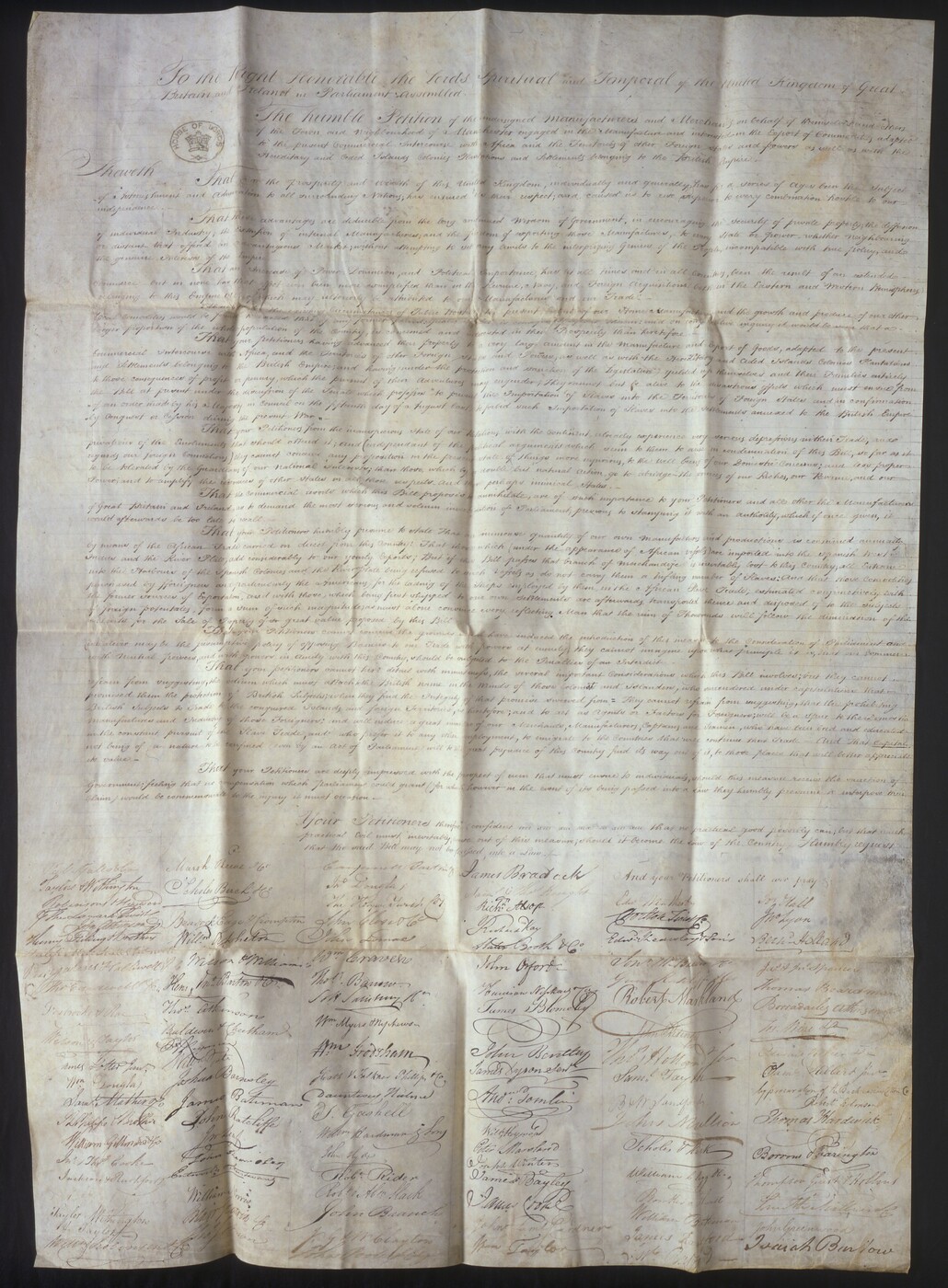
Sir Robert Peel MP (1788-1850) saw abolition as a threat to merchants’ trade interests and to Manchester as a cotton town. Peel’s petition was presented to the House of Lords in May 1806. Robinson and Heywood were among the signatories.
The Foreign Slave Trade Abolition Bill was passed, preventing British traders importing enslaved people into territories belonging to foreign powers.
Image reproduced courtesy of the Parliamentary Archives, London
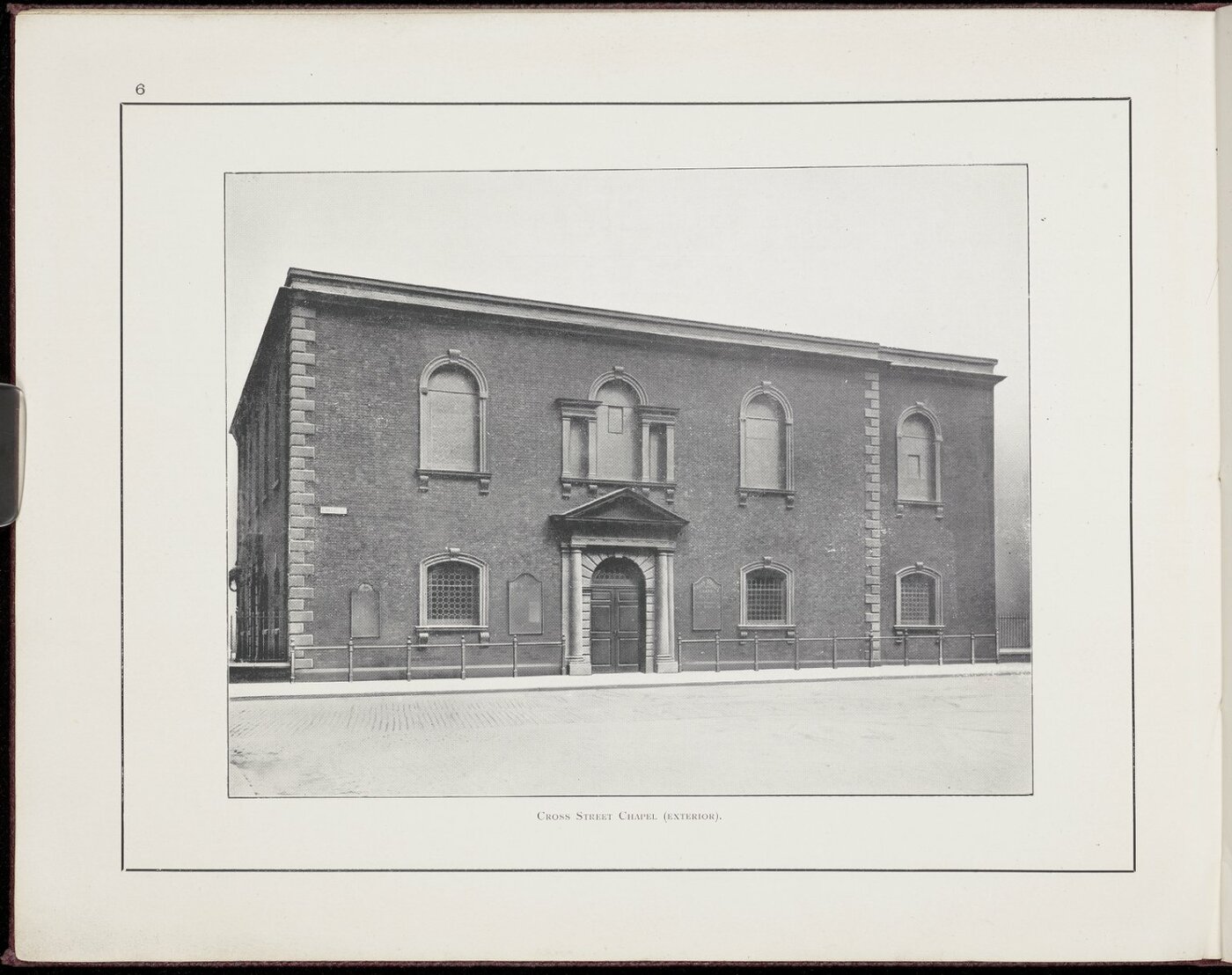
The non-conformist Cross Street Chapel attracted the city’s elite merchants and businessmen, including the Heywood and Robinson families. A number of these families intermarried and financially benefited, directly and indirectly, from the transatlantic slave economy.
For example, Thomas Robinson’s daughter, Sophia Ann Robinson (1795-1852), married Sir Benjamin Heywood.
Pro-slavery culture
A pro-slavery culture threaded through the cultural and familial networks of Manchester's elite. Read the family tree to explore business and familial ties that bound the University's funders and founders together.
Family and business relationships
A full text alternative is provided below in a collapsible panel.
Text alternative and key for the diagram
Use the links below to jump to the corresponding person in the diagram. (If highlighting is enabled on your site, the box will briefly glow.)
Key
- Business link to slavery
- Business practices linked to slavery.
- Direct link to slavery
- Direct involvement in slavery as an enslaver.
- Solid green border
- Donor or founding member of the Manchester Mechanics’ Institute.
- Solid purple border
- Donor or founding member of Owens College.
- Red line
- Business partners.
Manchester Mechanics’ Institute (green border)
Owens College (purple border)
Direct links to slavery (△)
- Samuel Ogden
- Benjamin Heywood (1723–1795)
- Nathaniel Heywood
- Benjamin Arthur Heywood
- Robert Gladstone (1773–1835)
Business links to slavery (■)
- Robert Hibbert
- Thomas Robinson
- Nathaniel Heywood
- Benjamin Arthur Heywood
- Samuel Robinson
- Sir Benjamin Heywood
- James McConnell
- John Kennedy
- John Owens
Business partnerships shown
Marriages shown
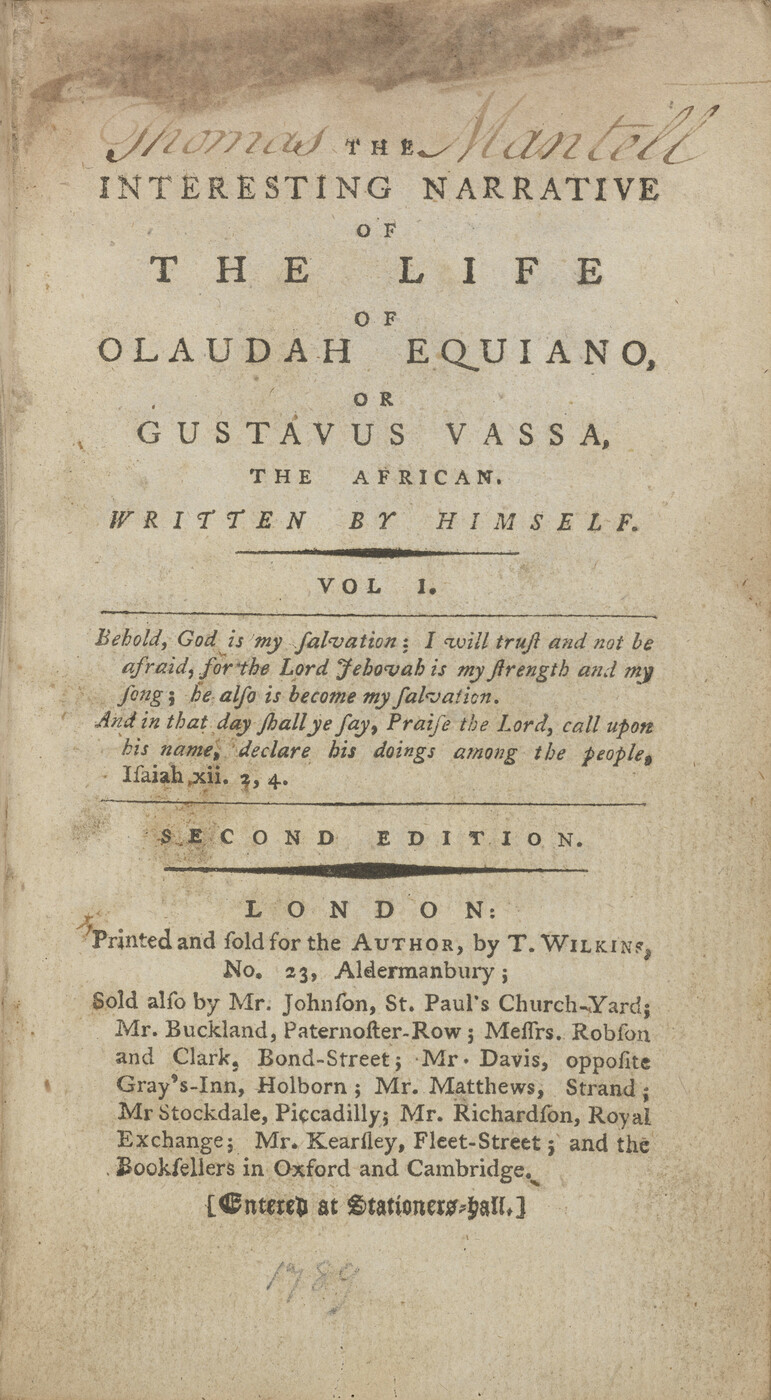
According to his memoir, Olaudah Equiano (1745-1797) was enslaved as a child in Nigeria and trafficked across the Atlantic before buying his freedom and going to London. In 1789 he published his autobiography and became a prominent figure associated with the campaign to abolish the trade of enslaved African people.
Its publication coincided with a parliamentary debate on slavery. Equiano opposed ideologies claiming that Black minds were inferior and Black bodies were sellable commodities.