

Sea Islands Cotton
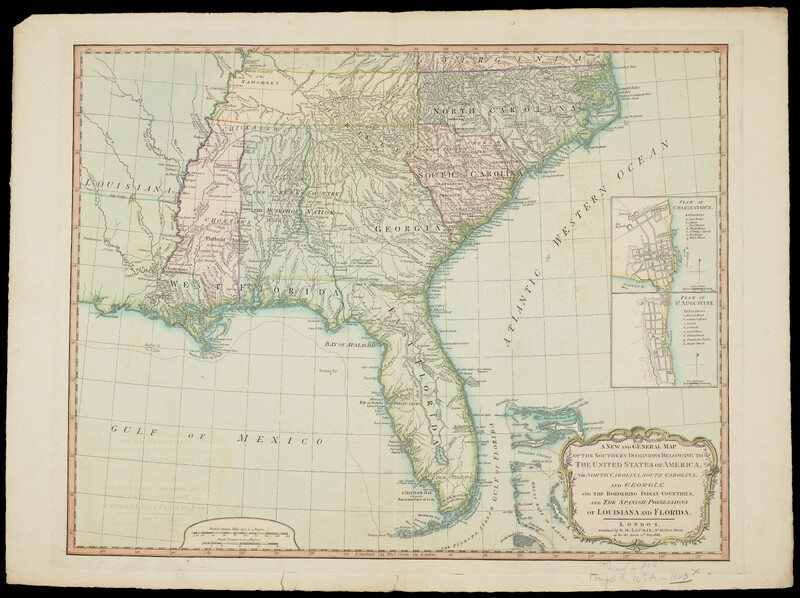
A New and General Map of the Southern Dominions Belonging to the United States of America, 1823, MMGS: F (120)
Accounts and order books in this library show that McConnel & Kennedy were, from their foundation, buying cotton grown by enslaved Africans in the Caribbean and North and South America. By the early 19th century, they specialised in Sea Island cotton from Georgia and South Carolina in the US. This was famously the world’s most prized cotton thanks to long, delicate fibres which made it ideal for making luxury cloth.
The Sea Islands are the home of the Gullah Geechee people, descendants of Africans and African Americans who were enslaved for generations on cotton plantations, which supplied many of Manchester’s manufacturers and merchants with raw materials.
This letter lists cotton shipments for McConnel & Kennedy from Charleston to Liverpool on the ship Ceres in 1817. We can trace the individual plantations and enslaved communities in South Carolina who grew this cotton to Seabrook Plantation, Seabrook Island, Fenwick Island, Hanscombe Point on Johns Island, and the Maxey Plantation on Huspa Creek.
In this letter Speakman, a cotton merchant from Savannah, Georgia, reports the purchase for McConnel & Kennedy of 15 more bags of ‘HABERSHAM’. Habersham was the name of an enslaver who owned a cotton plantation on Parris Island, South Carolina, where this cotton was grown.
Solomon Northup (c1807-1864) published this account in 1853 of his kidnapping and trafficking to a cotton plantation. This passage concerns Patsey, an enslaved woman who was highly skilled at picking fibres. Women and children, with smaller and nimbler hands, were particularly valuable to enslavers, who monitored daily performance and used violence and torture to push individuals to work faster.