

Owens College and Cottonopolis
Photograph of Owens College, c1873, UPC/2/355
The founding of Owens College in 1851 came from a single gift of nearly £100,000 (over £10 million today) from the estate of Manchester merchant and industrialist John Owens.
Like other donors, Owens acquired his wealth from a combination of sources including investments in textile manufacturing and the direct importation of raw cotton. Records from the Owen Owens & Son family business reveal that raw cotton was sourced chiefly from brokers in Charleston, New Orleans and Savannah and cultivated by enslaved Africans on plantations across the southern US.
This invoice identifies a shipment of ‘Uplands Cotton’ purchased by Owen Owens & Son from the port of Charleston. Among the shipment were bales originating from ‘W. H. Ellison’, the owner of a large plantation in Fairfield County, South Carolina. Records from 1860 show 94 people of African descent were enslaved on this plantation.
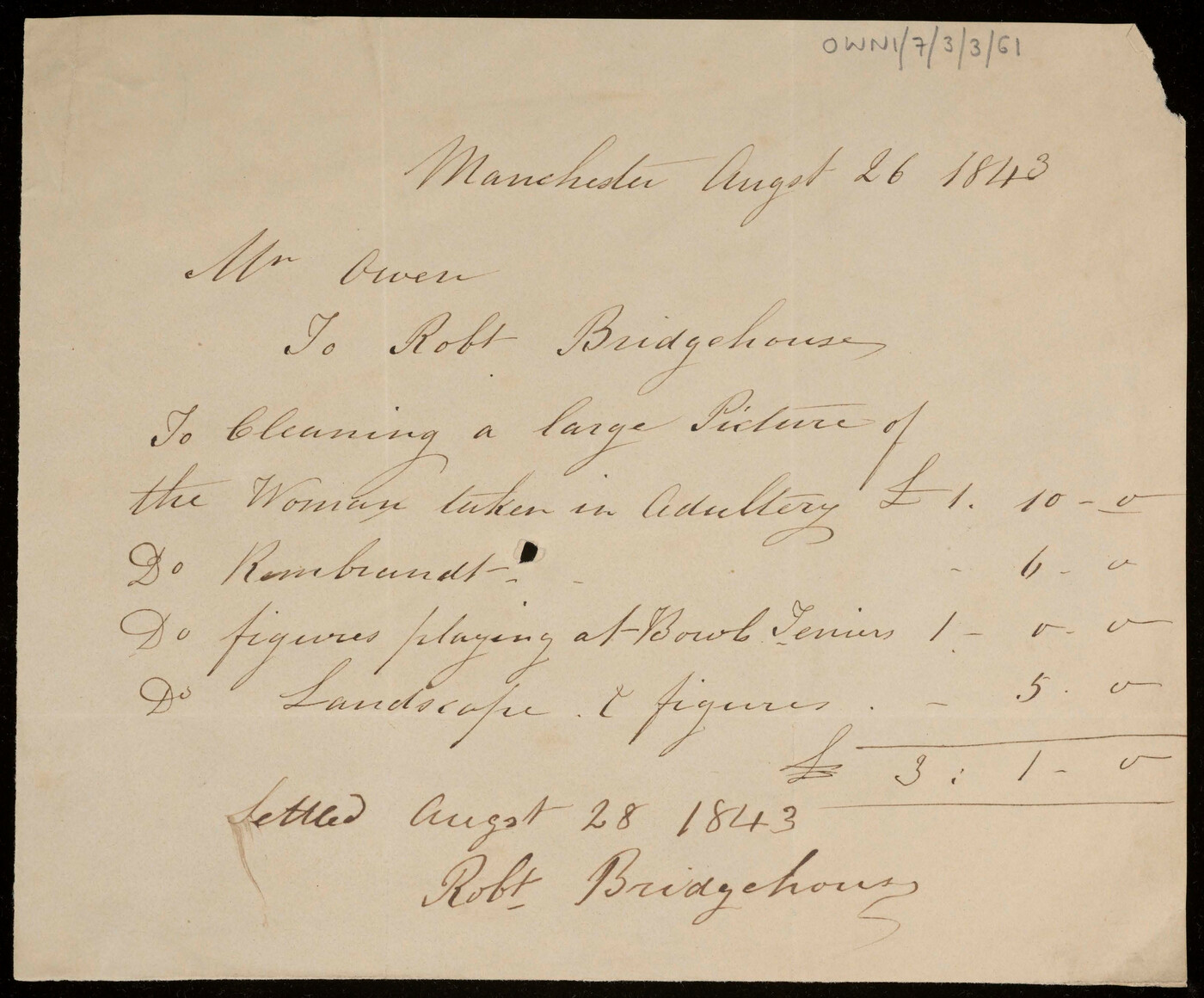
Though often cited as someone who lived frugally, John Owens gained tremendous wealth through his involvement in the cotton industry. This receipt, commissioning someone to clean his Rembrandt reminds us of the wealth men like Owens were able to obtain.
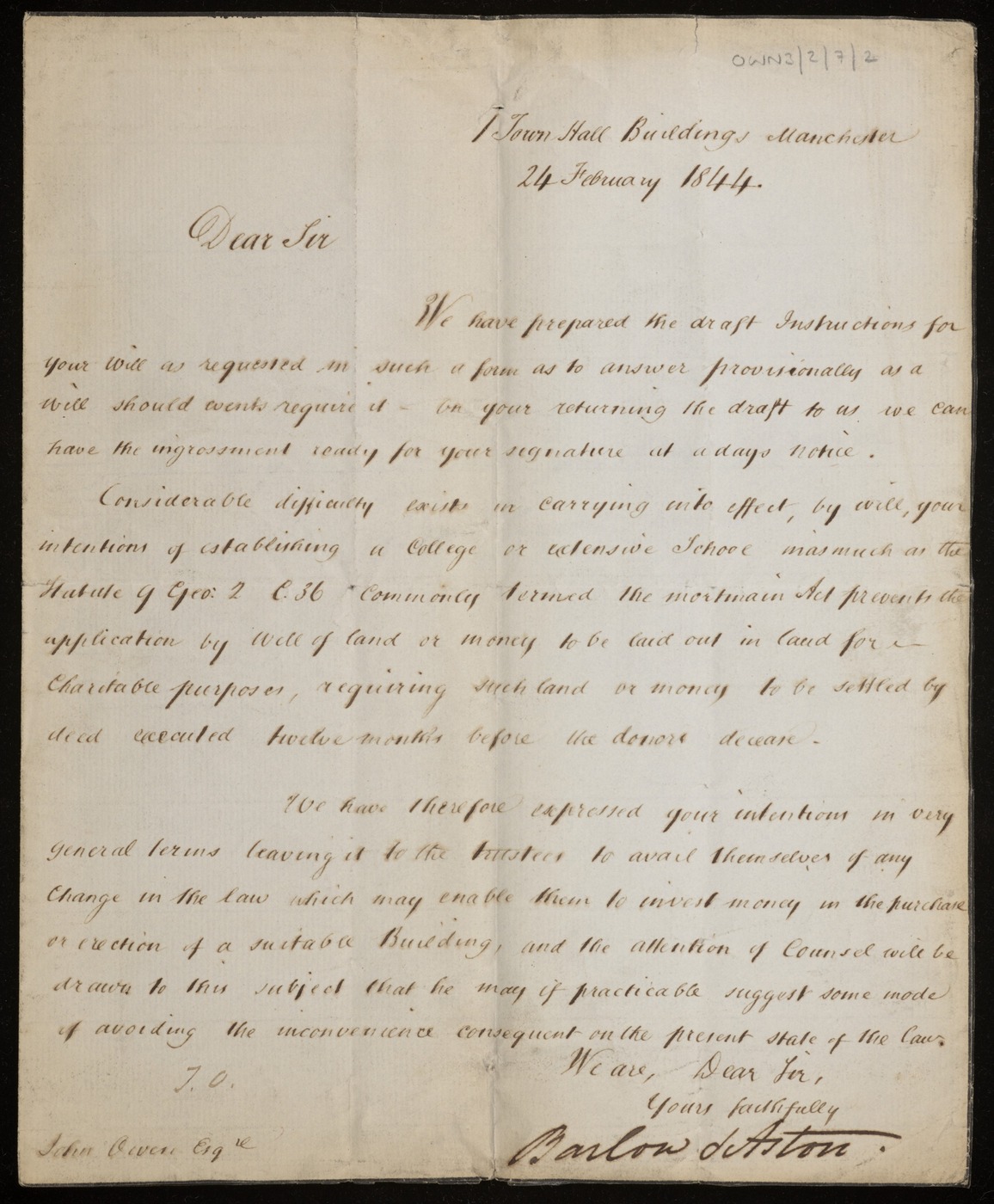
In this letter solicitor Barlow Aston informs Owens that a will has been drafted including his ‘intention of establishing a college’. Upon his death in 1846, Owens bequeathed money for the creation of an educational institution for the instruction of young men not less than 14 years old ‘in such branches of learning and sciences as are now and may be hereafter taught in the English universities.’
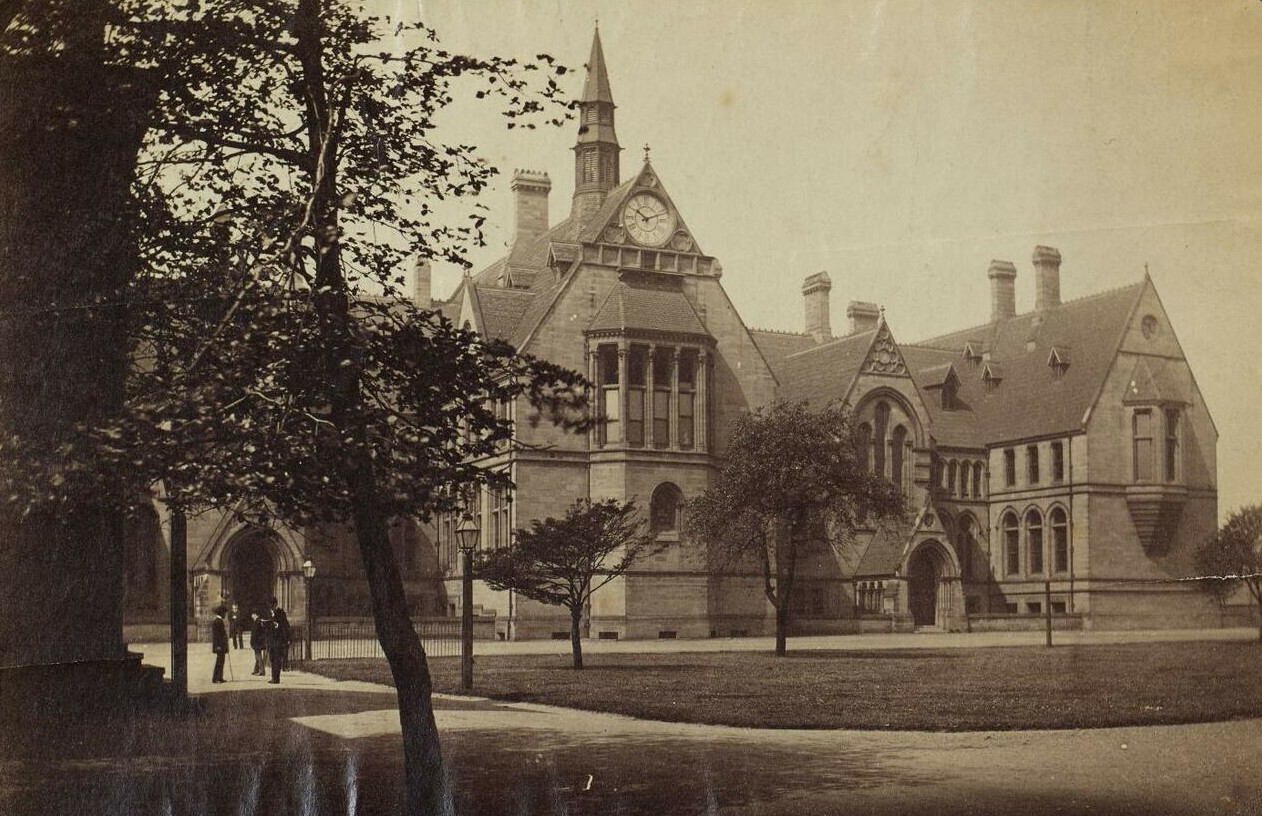
By 1870, Owens College had outgrown the original Quay Street premises and plans were drawn up for the development of a new extension site on Oxford Road. This photograph shows the first building constructed on the Old Quadrangle in 1873.