Dino Lema

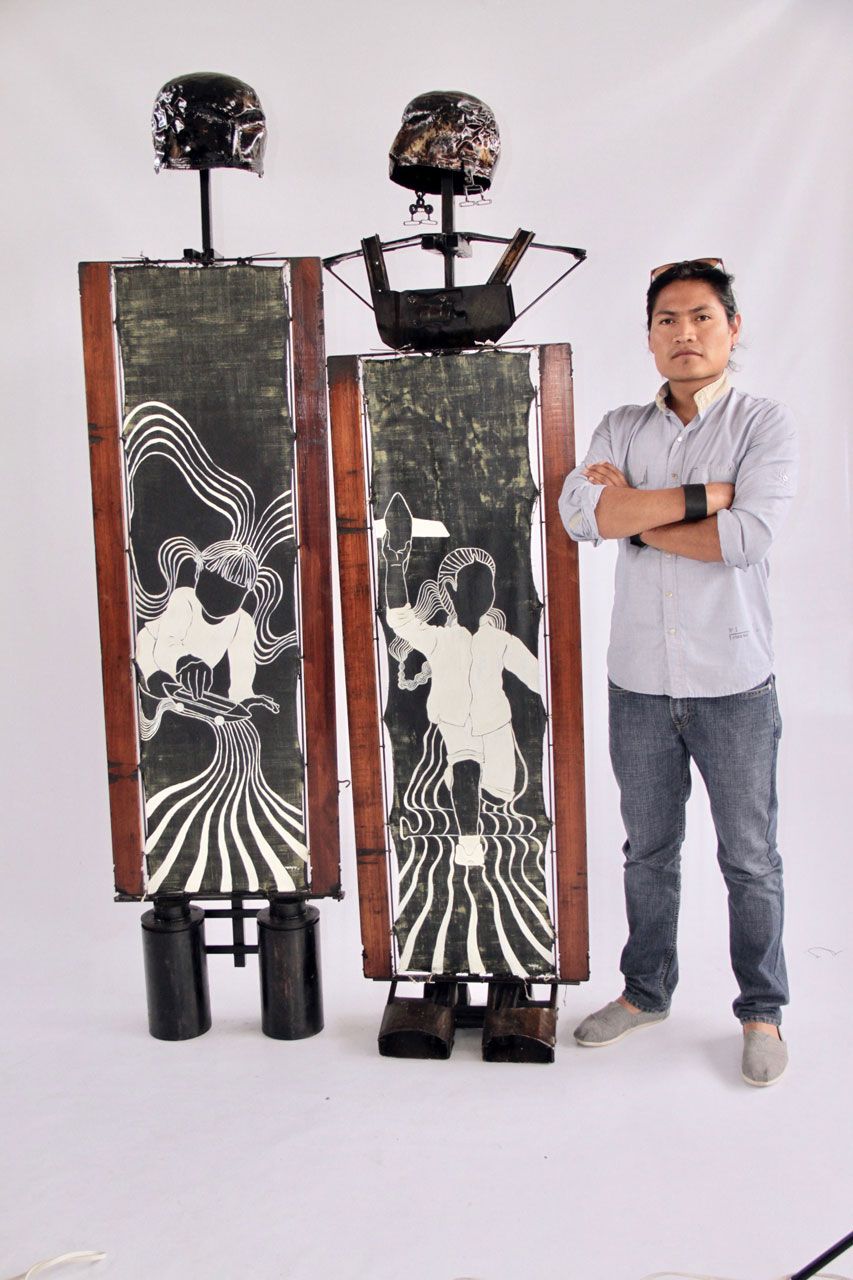
The artist Dino Lema poses with one of his sculptures.

Dino Lema is a visual artist born on 10 July 1987 in the community of Peguche-Otavalo, on the slopes of the imposing Imbabura volcano. At the age of five, he was influenced by his relatives in the world of art. Surrounded by the smell of turpentine, resin and paint, and the countless sketches in his uncle's and cousin's workshops, the boy was inspired to make his first drawings. During primary and secondary school he further developed his drawing skills.

After an unpleasant event, Dino decided to distance himself from his art for several years. Almost a decade later, he began to regain his taste for drawing and his passion for art, which later led him to begin his studies in the Plastic Arts programme at the Technical University of the North in the city of Ibarra, where he began to perfect his drawing and discover his love for painting.

During his arts degree Dino encountered many disciplines such as metal sculpture, where he discovered another passion for working with reused materials and combining techniques such as painting on canvas and metal sculpture, which would later lead him to create the sculptural work entitled Awak Wawakuna, pictured alongside.

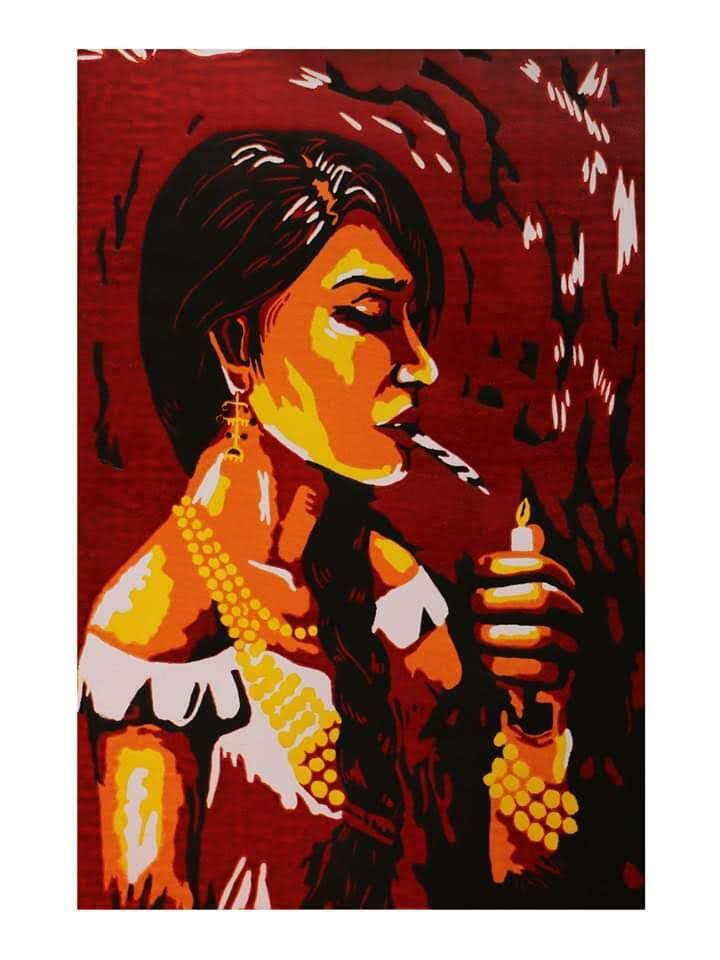
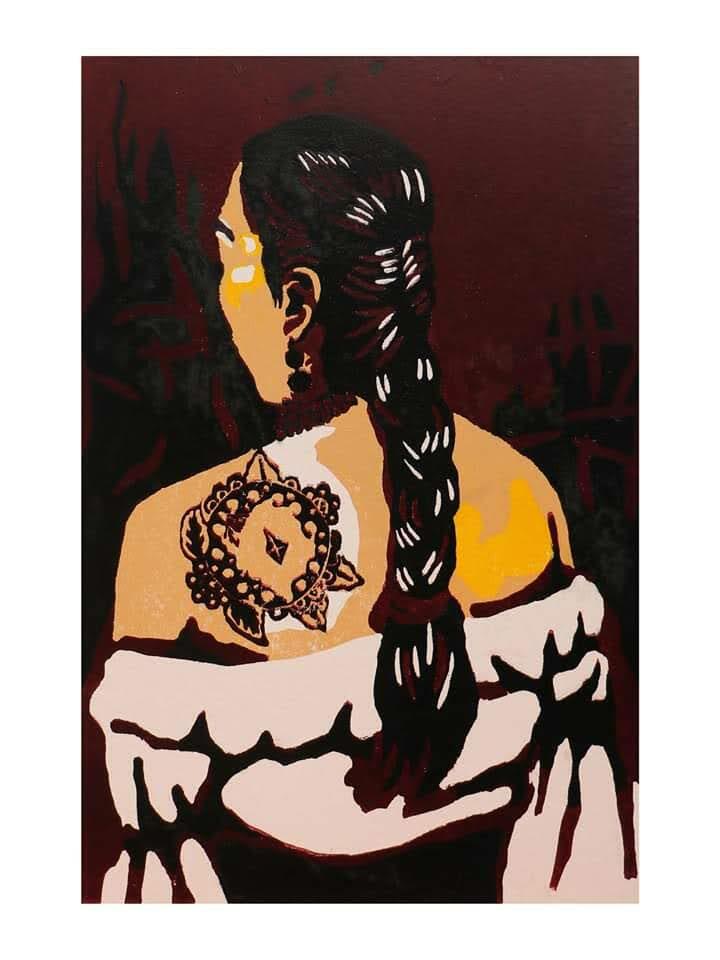
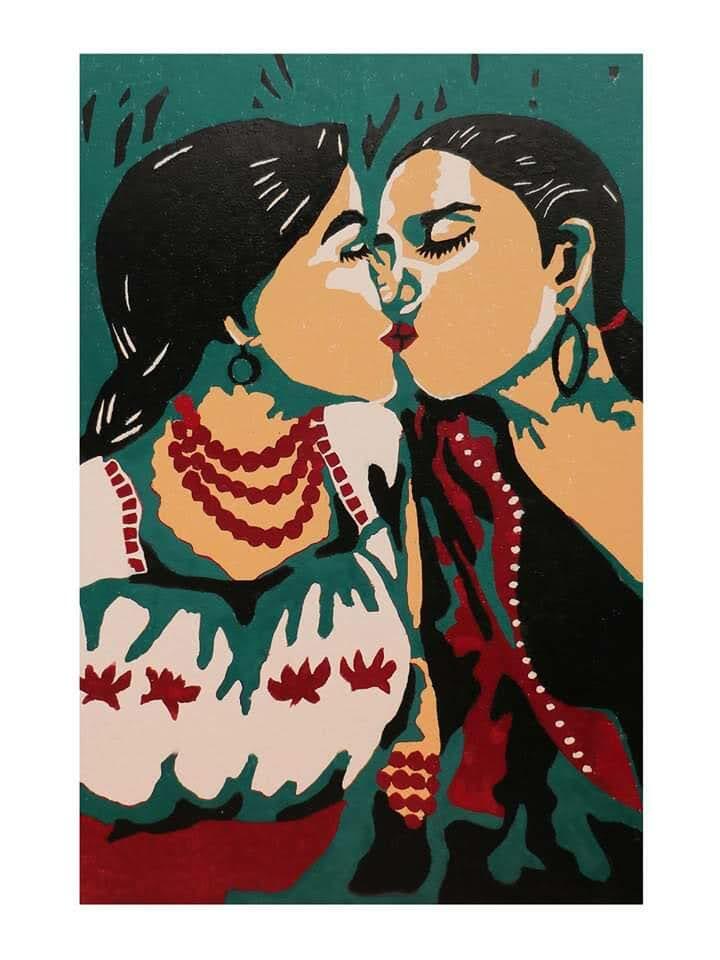
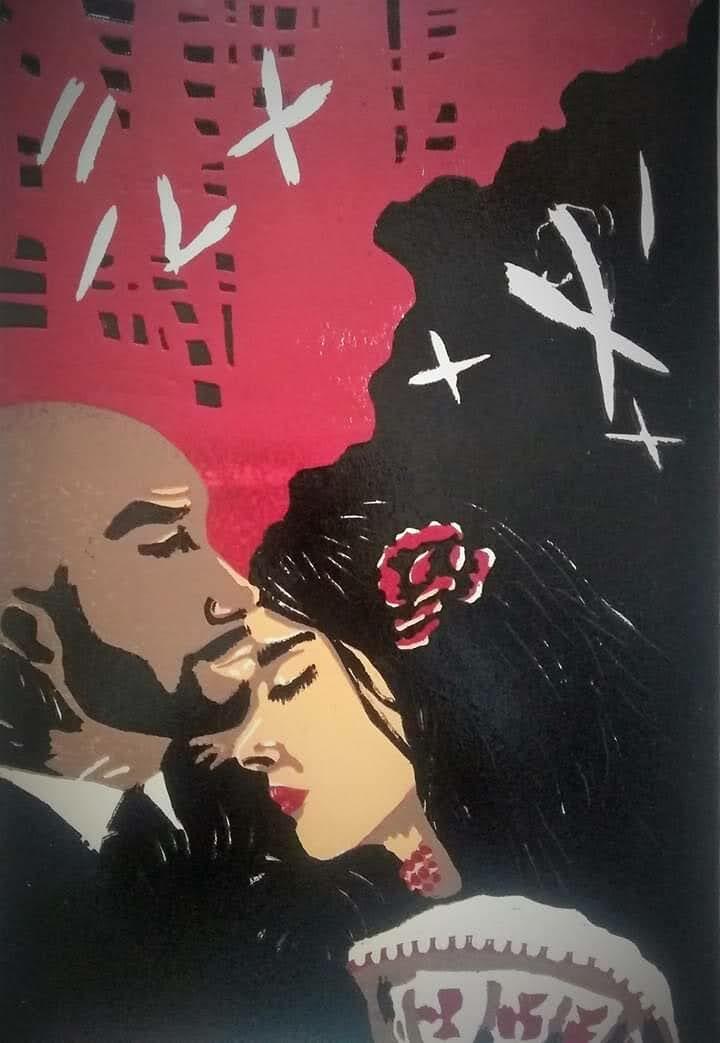
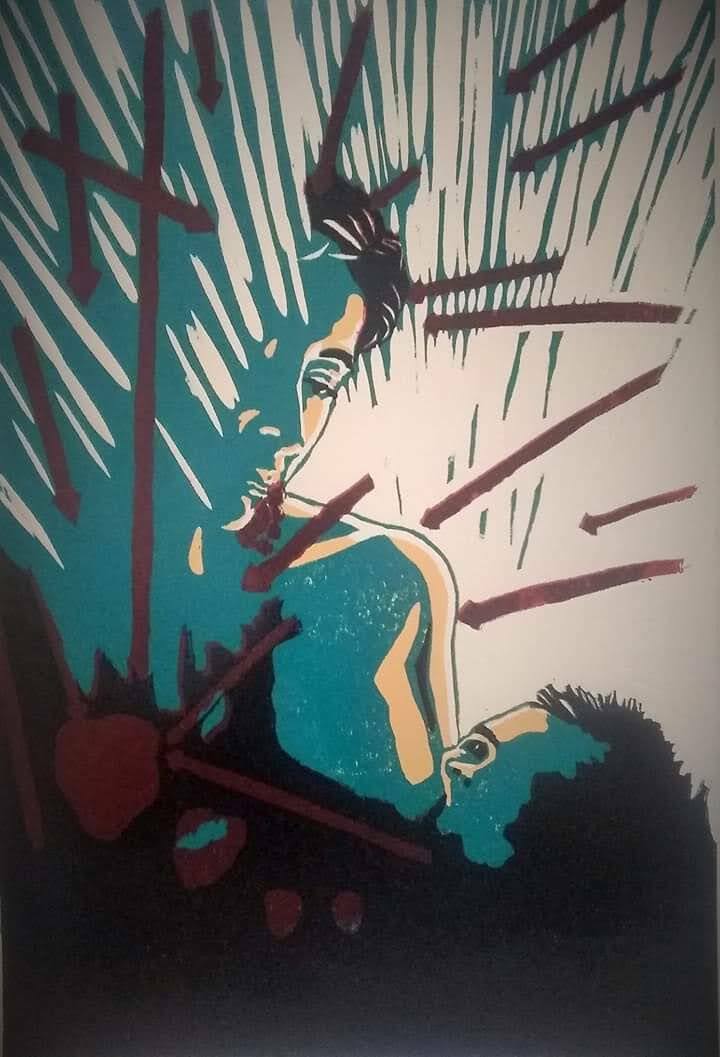
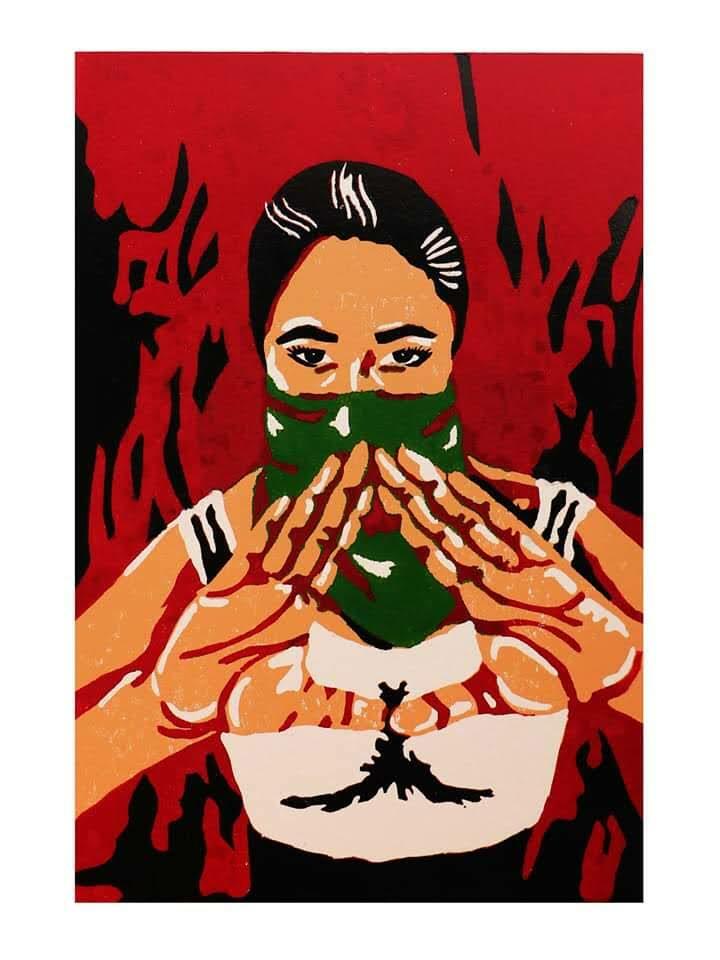
He also developed a fascination with the technique of engraving and later created woodcut works for the exhibition Kishpi Warmikuna. Yo no soy María. However, his fascination with painting led him to lean more towards pictorial work and to continue perfecting the technique of acrylic painting, creating works on different experimental media.
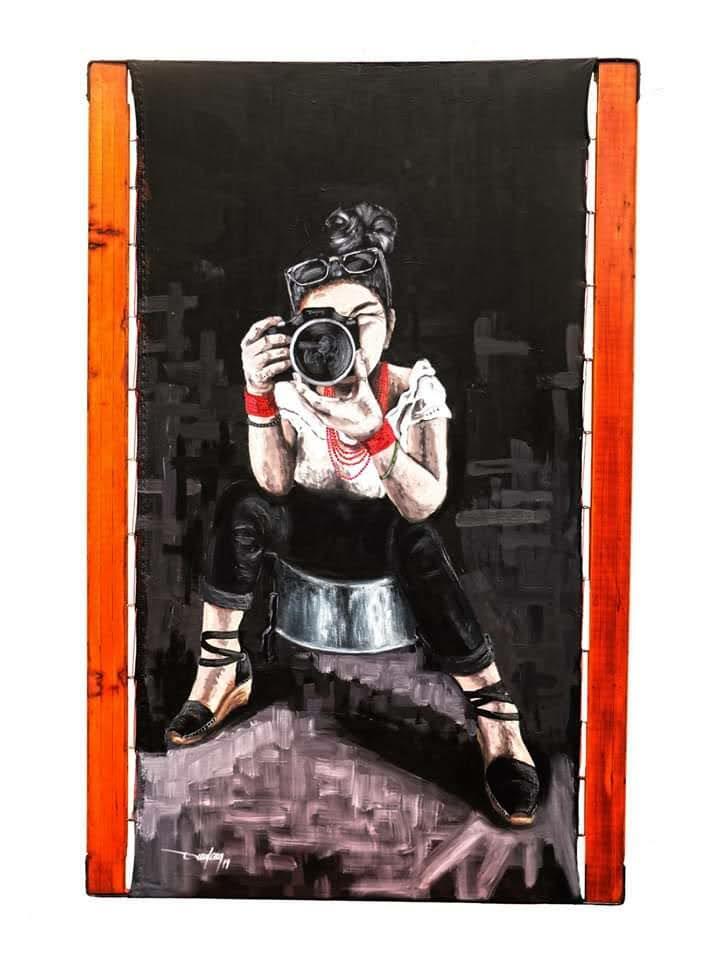
A seated figure holds a camera toward the viewer against a dark backdrop, framed by tall orange panels.
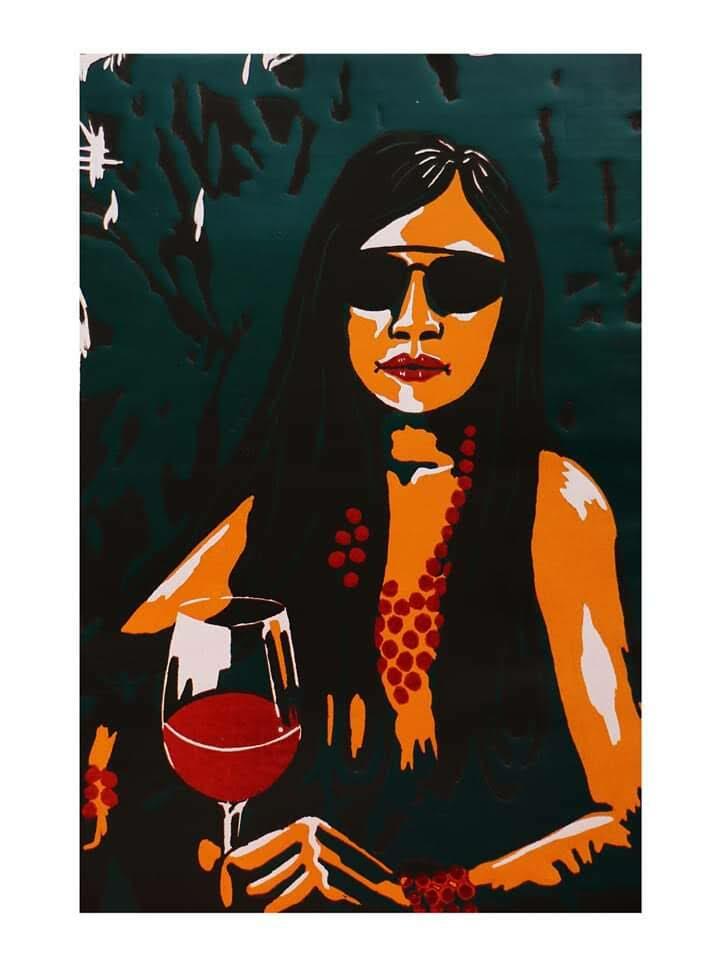
A stylized woman sits with a glass of red wine, wearing bright beads against a dark, textured background.
A stylized woman holds a lit candle, wearing layered jewellery against a deep red patterned background.
A woman seen from behind shows a detailed tattoo on her upper back, with a long braid and off‑shoulder blouse.
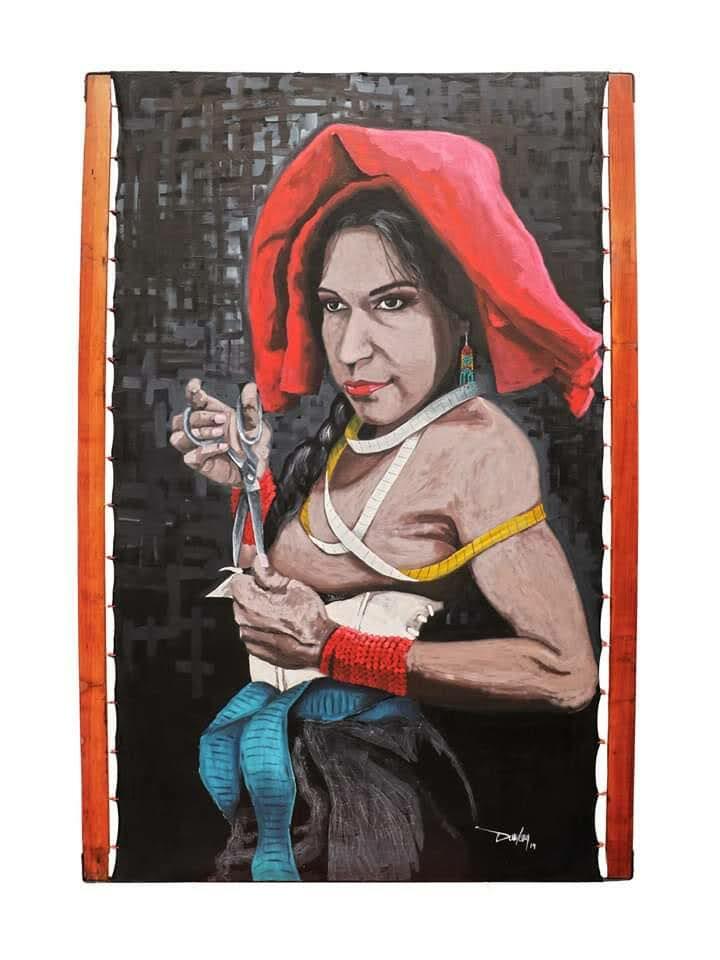
A figure holds scissors and fabric while wearing layered textiles and a red head covering against a dark backdrop.
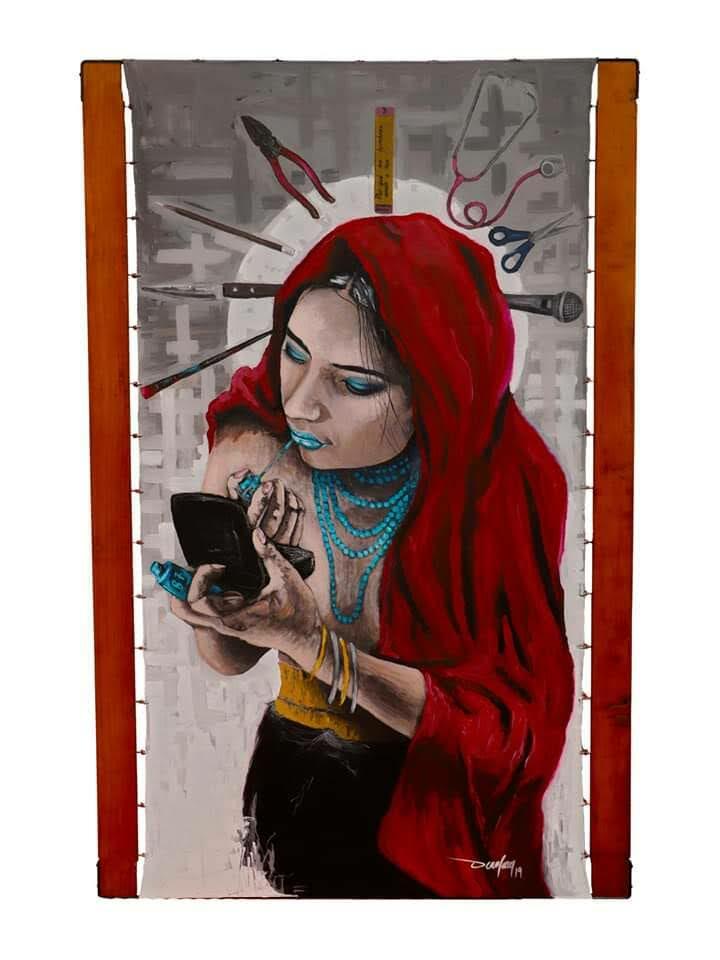
A figure draped in a red shawl uses a smartphone as tools and measuring objects radiate symbolically overhead.
Two women in vibrant folkloric dress lean close together, adorned with bold jewellery and patterned clothing.
A stylized couple stands close under expressive red and black patterns with abstract marks surrounding them.
Two stylized figures in bold teal and maroon tones appear amid dynamic radiating lines and abstract shapes.
A stylized figure presses hands together at the chest as flames rise behind, rendered in bold red and orange.
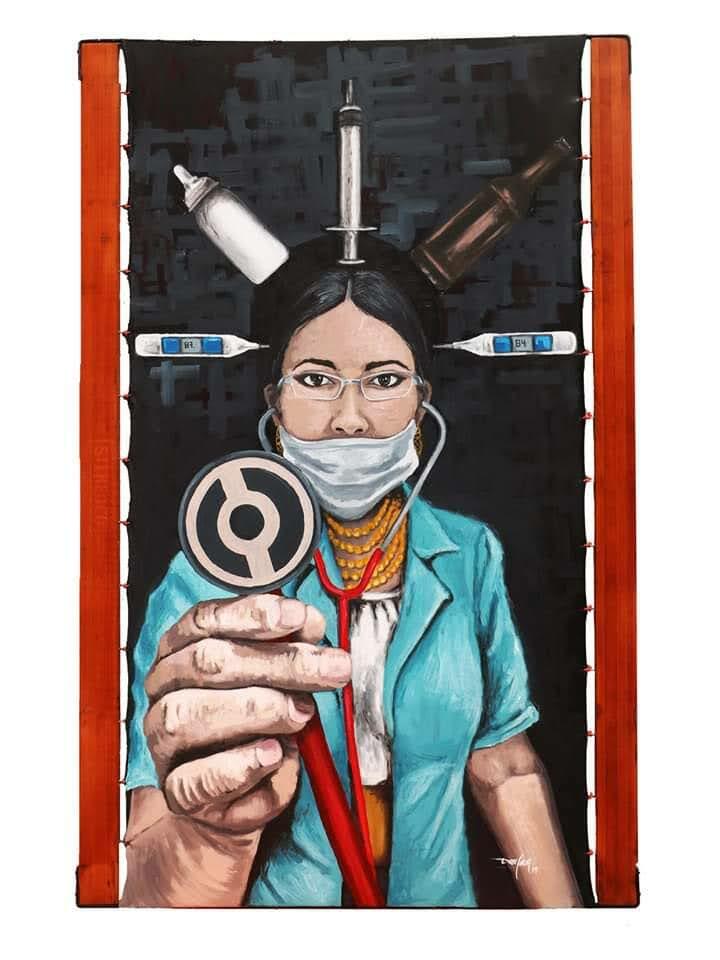
A medical‑themed figure holds a device toward the viewer, surrounded by syringes and instruments above.
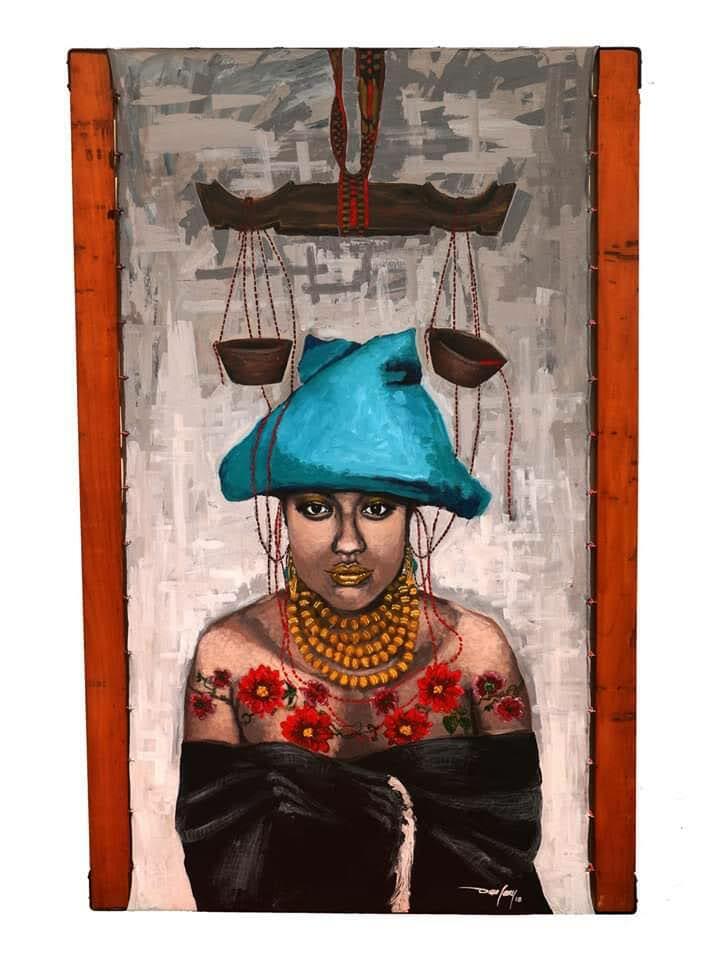
A figure wearing a blue head covering stands beneath hanging scales, dressed in floral patterns and layered beads.
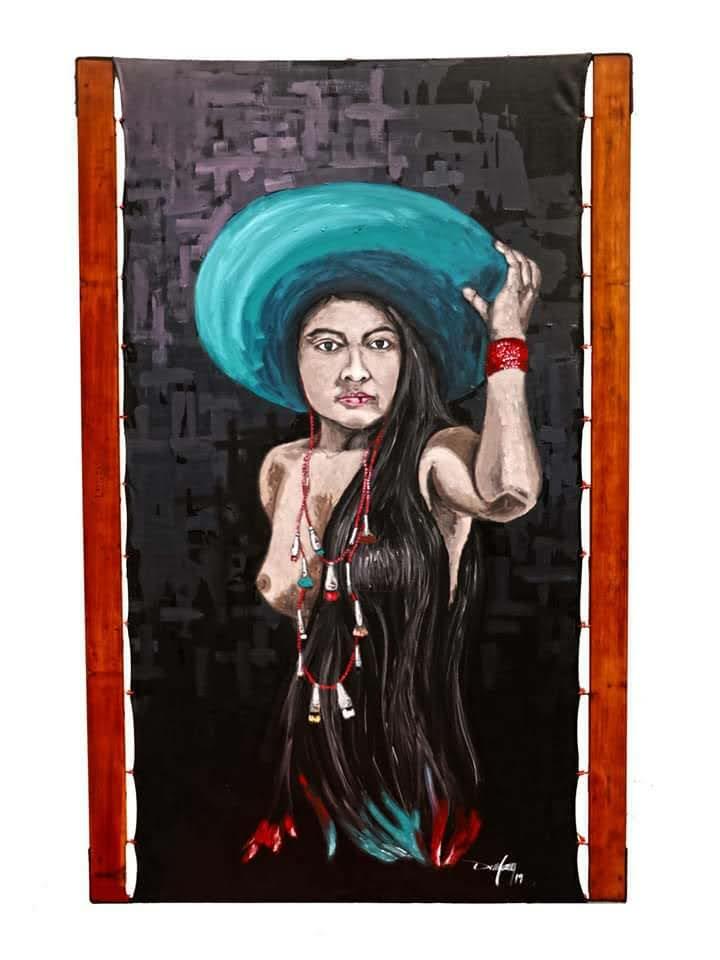
A figure lifts a large turquoise hat, long dark hair flowing, adorned with colourful beads and wooden framing.
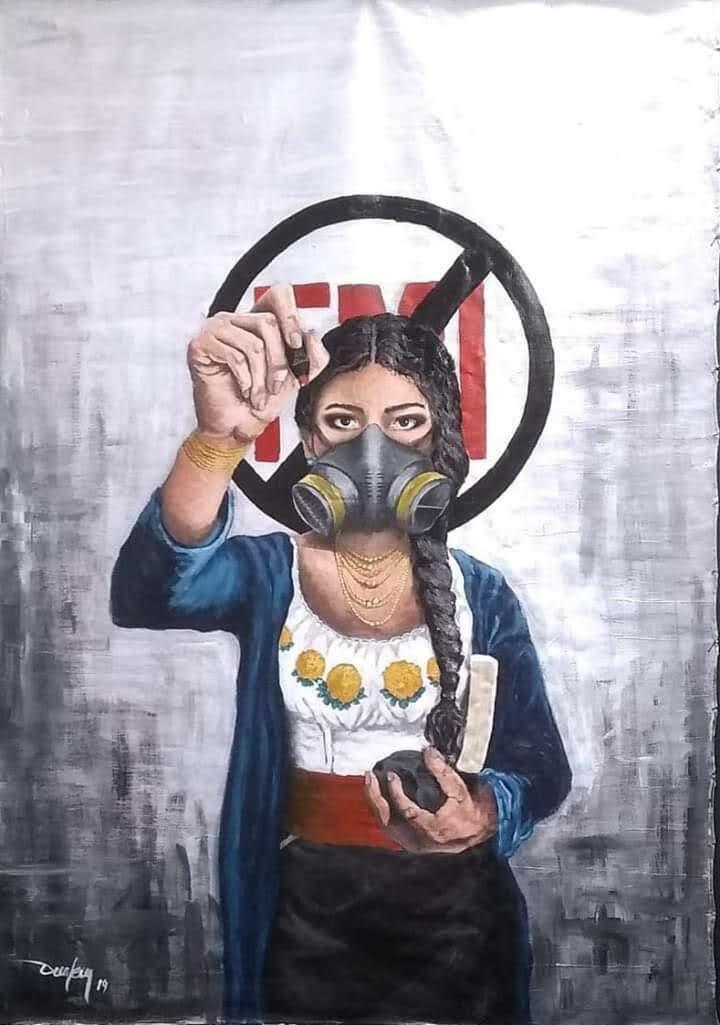
A woman wears a gas mask and holds a rock in one hand and the other aloft, with a prohibited sign in the background.
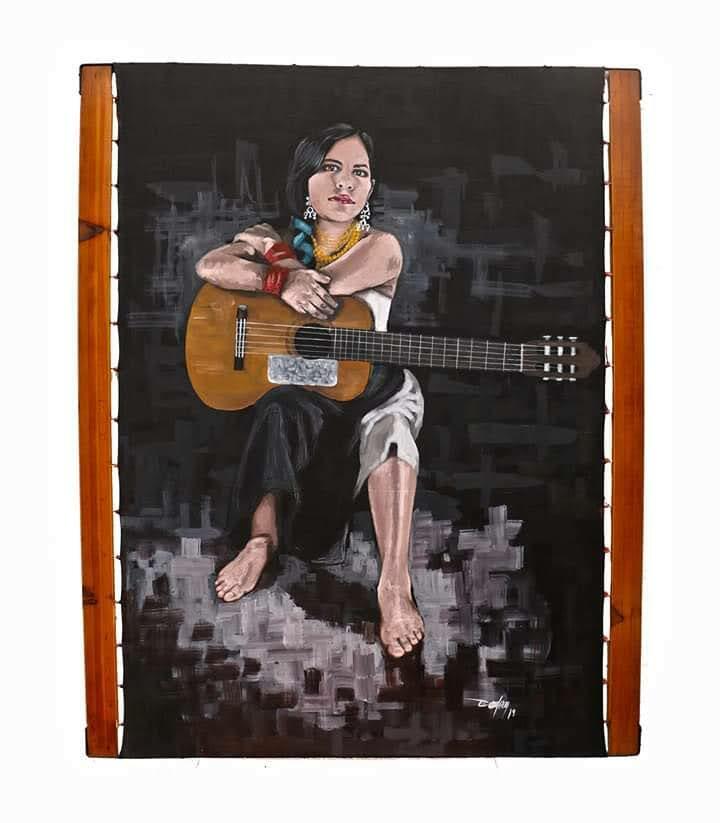
A seated woman rests a guitar across their lap, surrounded by a dark textured background with wooden framing.
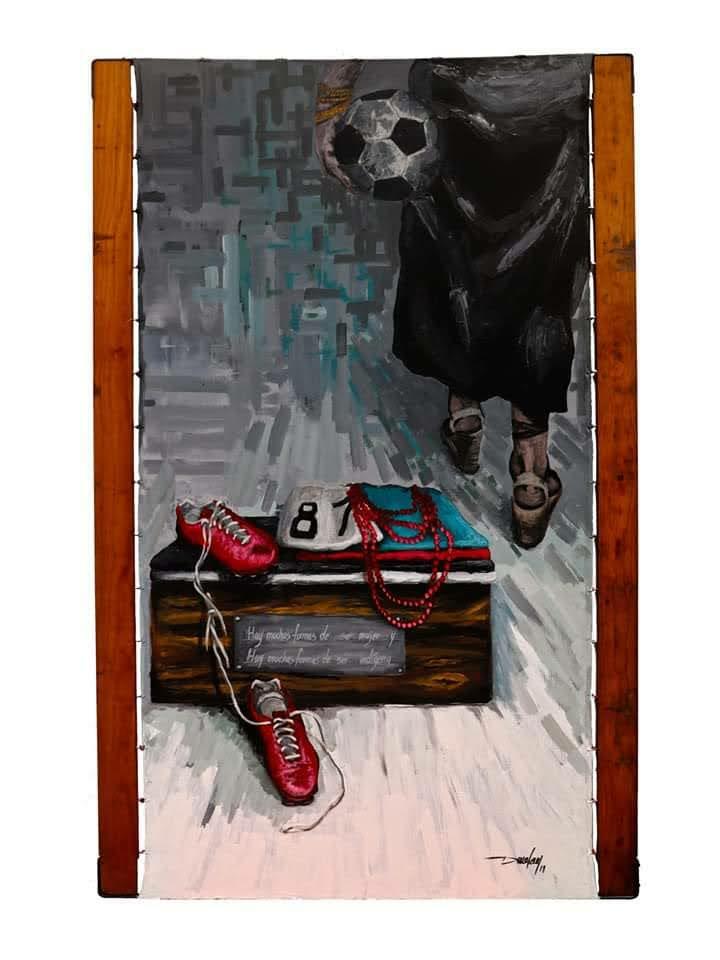
A football and worn shoes are carried by a person, in a room with a box holding cleats, a jersey, and red beads on a pale floor.

Return to the Runa Kichwa page