Ayliñ Wagvlen
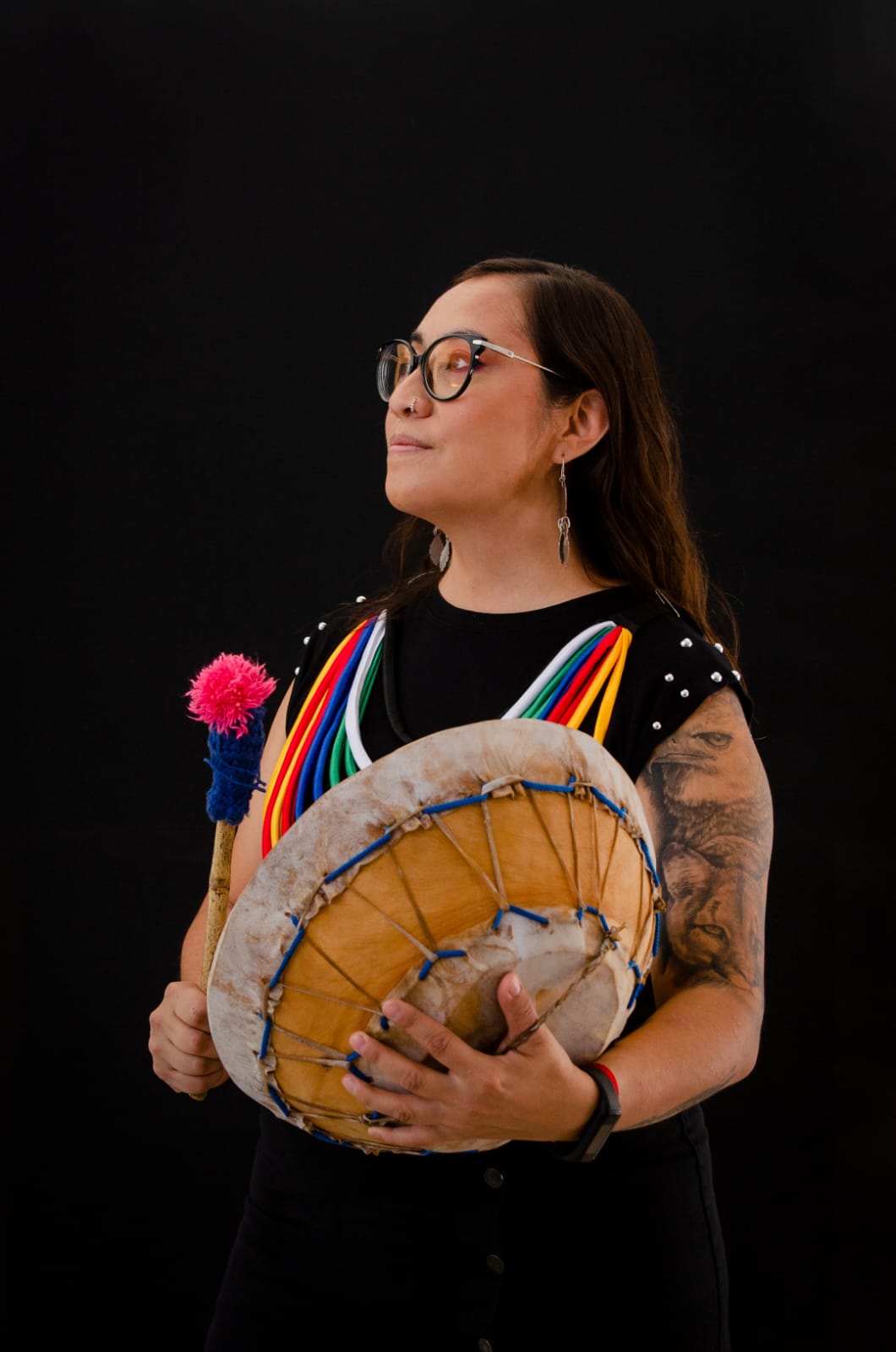
Ayliñ Wagvlen is a musician and dancer who specialises in Afrodescendant music, dance and culture, mainly from Peru and Guinea.
She lives in Gulu Mapu, Temuco (Chile), where she teaches Afro-Peruvian, Afro-Guinean and contemporary dance, as well as performing with the interdisciplinary company La Barbarie.
Ayliñ's artistic work is deeply influenced by her Mapuche identity, even as she studies and works on cultures from other territories. Thus, in 2021, she created Afrope en Wall Mapu, a space for encountering physicality and joy through the language of Afro-Peruvian dance. Through its name, it recalls and reaffirms her identity and that of the territory in which it develops, enjoying dance from the historical memory of her people, as well as identifying and linking the actions of resistance she has in common with Afrodescendant nations.
David Aniñir Guilitraro (1971) is a poet and cultural figure from Santiago, Chile.
His creative initiatives have shifted the poetic format to performative, audiovisual and sound experimentation, including “Los hijos de los hijos” (2016), “Mapurbe: debajo del asfalto” (2009) and the book Kalül Trawün (2012). He has produced recordings with musical bands and carried out public interventions, maintaining a constant creative process of sound and poetry together with the musician Pedro de Piedra.
The poetic work Mapurbe venganza raíz (2005), reissued in 2009 and 2018 by Pehuen Editores, has been featured in public educational texts and is studied in academic circles. Other works include: Haykuche (2008, self-published), Autoretraxto (2014, Odiokracia publishers), Guilitranalwe (2015, Quimantú publishers), Lentium (2016 Luna Negra ediciones) and Proesía (poetic prose – unpublished).
Mapurbe, an aesthetic and poetic conception of contemporary Indigenous identity, is coined from the new cultural registers of the Mapuche people.